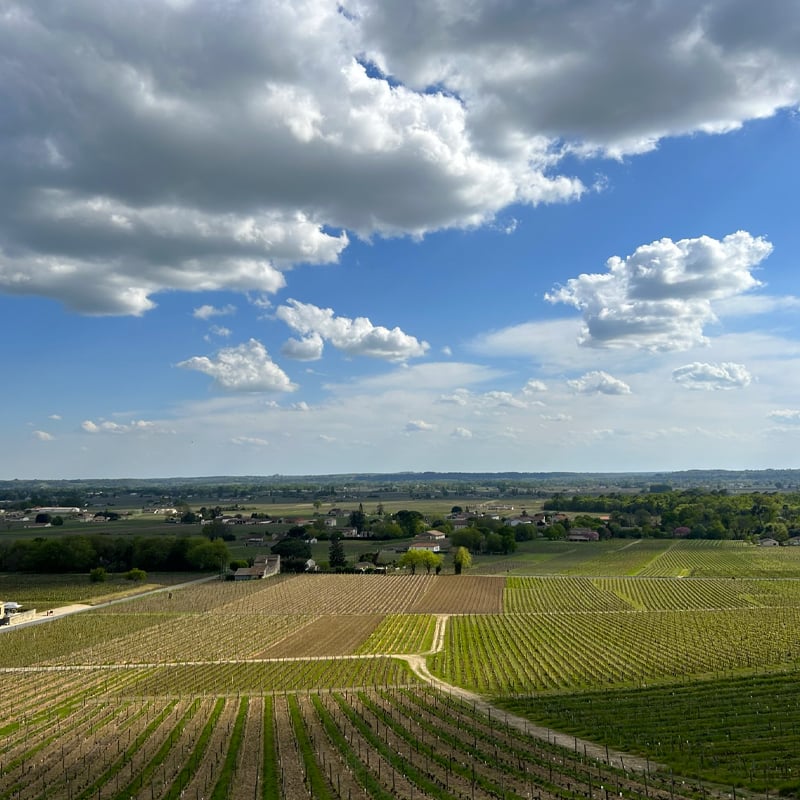
Piedmont, or Piemonte, means “at the foot of the mountains” – which it clearly is. The majesty of the Alps, to the north and west, separate Piedmont from France and Switzerland and the Appennines, to the south, provide a border with Liguria. Piedmont is a wine-lover’s and a culinary paradise. The magnificent scenery and white truffle-inspired cuisine are just for starters in Piedmont. It has all the makings of a hedonist’s utopia with a plethora of noble grape varieties providing a vast array of wine styles; wines for cellaring, wines for drinking young, aromatic whites and both white and red sparkling wines – world class bounty set within some of the most beautiful viticultural landscape in the world.
The mountains have a great effect on the climate of Piedmont . It has a very long, hot growing season, with extremely cold winters. Temperature inversion causes thick fog – so thick that the Corney & Barrow buying team made three successive visits, without seeing a single vineyard! It is said that the late-ripening Nebbiolo is so called as it is not ready for picking until the first fog, nebbia. In fact it is thanks to the prolonged autumn that this temperamental varietal does so well here.
Piedmont’s wines – key grape varieties and styles
Piedmont is home to a great many vine varietals, with the most widespread reds Barbera , Dolcetto and Nebbiolo , in that order, and Moscato far and away the most planted white.
Barberais native to Piedmont though it is grown throughout Italy. Vigorous, it was often used as a sturdy workhorse in the past. With good colour, soft tannins and elevated acidity it was seen mainly as a useful blending grape. It is now recognised for its potential to make extremely fine wines – rich in plump cherry fruit, complemented by that acidity.
Dolcetto, contrary to what the name implies, is not sweet. Purple in colour, styles vary according to where the vines are planted. High up on the hillsides the wines can be elegant and perfumed whilst, lower down, on the flat, they are heartier and fuller-bodied. Generally Dolcetto is designed for early drinking.
Nebbiolocomes first amongst the reds in terms of stature, responsible for wonderfully heady, smoky Barolo and its more elegant, feminine foil, Barbaresco , both DOCGs. A late-ripener, the variety requires high maintenance. Its home is the Langhe Hills of Piedmont, where it fares best. Its synonym Spanna is responsible for Gattinara, produced in the Vercelli Hills and Ghemme in Novara, both DOCG .
Moscato Bianco (there are also Giallo and Rosa versions) is the most highly planted white varietal in Piedmont, producing headline names Asti Spumante and lighter, less sweet, Moscato d’Asti , both of which are DOCG. Quality varies enormously but the very best are delightfully frivolous and grapey.
Piedmont’s wines – key regions
One of Italy’s greatest sources of top wines, Piedmont houses the most DOCGs of any region: Barolo, Barbaresco, Gattinara, Ghemme, Brachetto d’Acqui, Moscato d’Asti and Gavi .
Barolo and Barbaresco vineyards are mainly planted on hillsides surrounding the villages of Castiglione Falletto, Barolo, Verduno, Monforte d’Alba , Serralunga d’Alba and La Morra.
Monforte d’Alba is of most interest to Corney & Barrow, where we represent, exclusively, the iconic, ultra-traditonal wines of Giacomo Conterno. Monfortino Barolo Riserva iis the standard-bearer, though it is only produced in exceptional years. Barolo DOCG Cascina Francia and Barbera DOC Cascina Francia are excellent ambassadors both for Giacomo Conterno and the region.
For more everyday, accessible Barolo and Barbera d’Alba Corney & Barrow work with young winemaker Sara Vezza of Josetta Saffirio – a family concern where they have recently started bottling their own production. These are attractive early-drinking Barbera and Barolo , sensitively handled.
Gavi, in the south-eastern corner of Piedmont has a much softer landscape than that of the Langhe , vines planted on gentle, rolling hills, close to the Ligurian border. Gavi’s proximity to its southern neighbour is reflected in its cuisine and in its styles of accompanying wines, favouring the light, aromatic whites from the Cortese grape. Corney & Barrow work with Fratelli Levis, who produce benchmark Gavi di Gavi . Fossil-rich soils impart mineral character and six months on lees makes for added complexity.
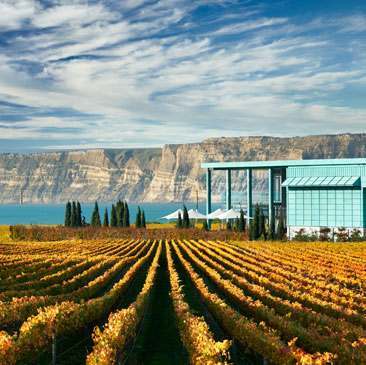
Cascina Francia vineyards at Giacomo Conterno, Serralunga d'Alba