

ROCHEYRON 2022
“I am sure 2022 will mark a ‘before and after’ in the history of Chateau Rocheyron.”Peter Sisseck, June 2022
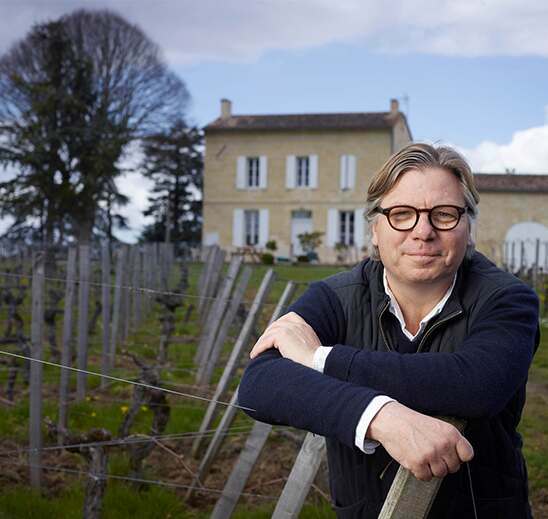
Over the past decade, Peter Sisseck’s Château Rocheyron has risen phoenix-like from vinous obscurity, to become one of the hottest newcomers in Saint-Émilion.
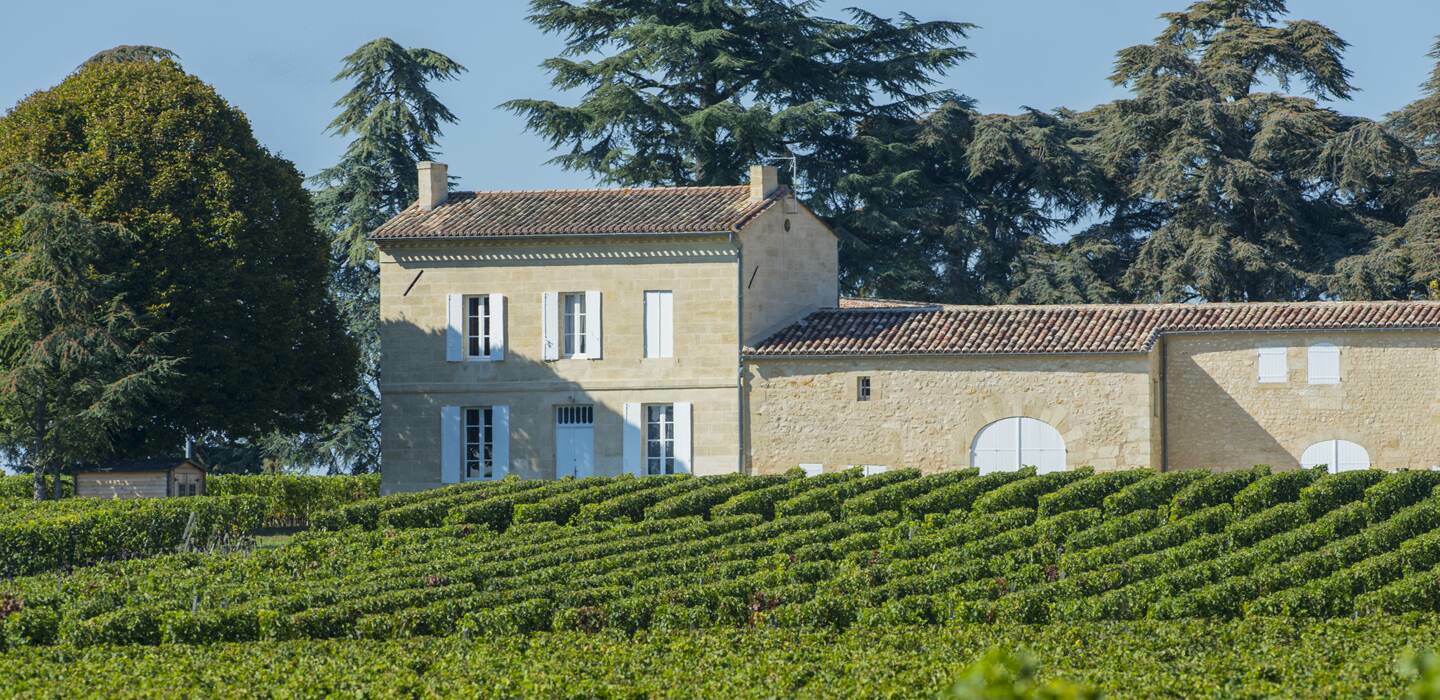
Bordeaux was an early staging post in Peter’s career, before moving to Spain and founding Dominio de Pingus. Rocheyron has therefore been a return to his winemaking roots. He has breathed new life into this jewel of a property, perched on the edge of Saint-Émilion’s famous limestone plateau.
Rocheyron was the surname of the family who owned the estate in the seventeenth century. The cellar and vineyard team is managed by Régisseur Mathieu Raveraud, who has worked alongside Peter here since the estate was acquired in 2011 and in his quiet, assured way, has been a key ingredient in the success of Rocheyron.
The estate has been certified organic since the 2020 vintage and continues in the process of biodynamic conversion, having started the process in 2014.
With over a decade of vintages under his belt, you really feel that Peter now has Rocheyron exactly where he wants it. The 2022 is a brilliant expression of Saint-Émilion’s minerality, with sultry, silky fruit and stunning overall poise.
I caught up with Peter at Rocheyron in April – do have a watch below…
GUY SEDDON
HEAD OF FINE WINE BUYING
June 2023
THE VINEYARD
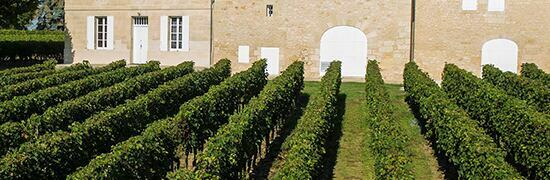
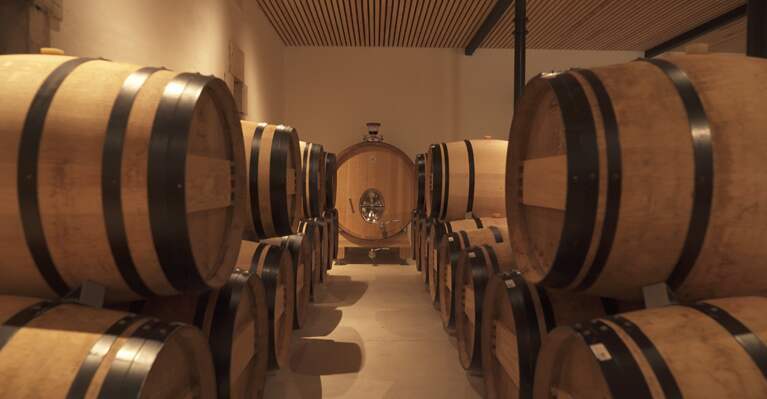
The 7.4 hectare vineyard comprises two main plots. The larger of these, covering around three quarters of the total area, is home to the younger Merlot vines, which are planted on hard limestone soils. The other, a plot called La Boutisse, is on more fractured limestone and is planted with 80+ year old Cabernet Franc and Merlot, bringing up the average vine age to over 45 years.
Three passes through the vineyard are made to harvest young Merlot, old Merlot and finally Cabernet Franc, which are all then vinified separately. Yields are around 25-35hl/ha. 2020 falls within this range, at the lower end, despite spring mildew and the mid-summer heat.
As at Pingus, organic and biodynamic practices hold sway here. Organic certification was obtained in 2020 and the estate has been in the process of Biodyvin biodynamic conversion since 2014. Peter is not an advocate of green harvesting, saying he would rather encourage a natural balance in his vines.
He has encouraged biodiversity, planting bushes and shrubs at the borders of the vineyards. In his words, “I think there is a lot that can be done in Bordeaux to improve the environment.”
THE CELLAR
Peter’s aim is to produce a classic, terroir-focused style of Saint-Émilion.
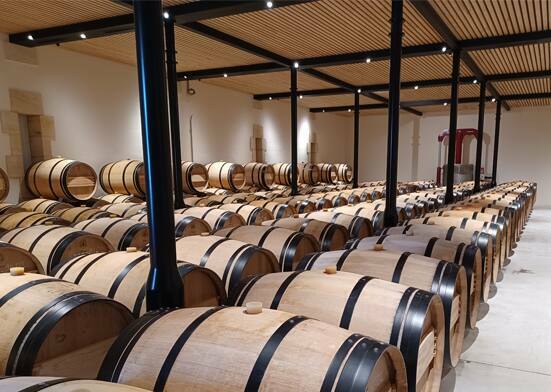
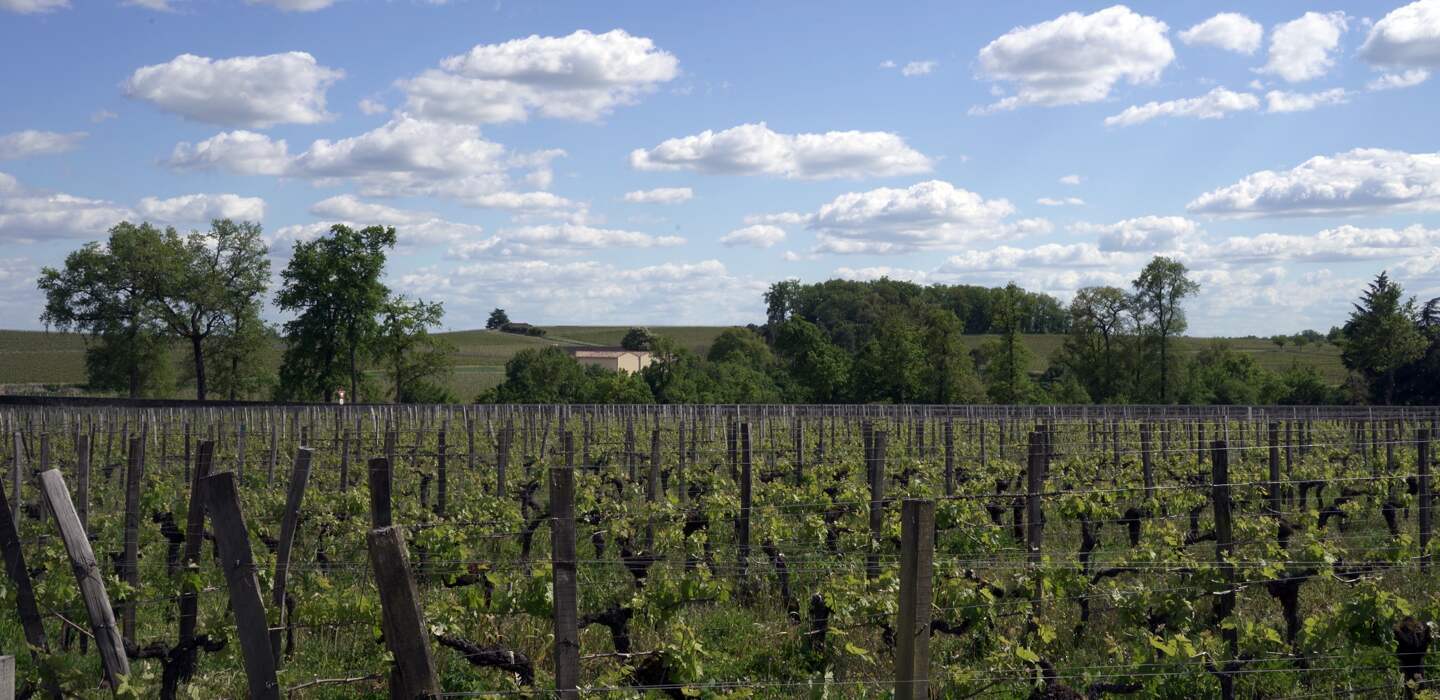
The manageable size of the estate, with its modern, functional cellar, allows for vinification by parcel and vine age.
Fermentation takes place at a moderate 22°C, so as not to extract too much from Rocheyron’s very concentrated grapes. As Peter diplomatically puts it, “excess concentration is not really the way forward.”
His comments on alcohol are also interesting – the higher the alcohol, the greater the extraction, which needs to be borne in mind, especially with Bordeaux’s increasingly warm summers. (Also of interest is that Peter says the effect of climate change on his corner of Bordeaux has so far been beneficial.)
Following 30 days in concrete vat, the 2022 is now being aged in 35% new oak. Peter has said he values the influence of oak in Rocheyron (in contrast to his approach at Pingus). The wine will remain in barrel for 14 months and will be bottled without filtration.
2022 VINTAGE NOTES
“I think with the 2022 we have come very close to the ideal that we are looking for. I am immensely proud of this wine.” Peter Sisseck, April 2023

The winter period was close to the seasonal average (+0.4°C) and above all dry (-30% less precipitation over this period compared to the average). This rainfall deficit continued throughout the season.
Mid-budburst was around 30th March, earlier than in 2021. From 1st to 8th April, episodes of frost followed one another but the later budburst plus the active and passive control (wind machine and candles) greatly limited the damage.
From the end of April, temperatures were warm (+2.5°C compared to seasonal norms) in dry conditions and the growth was active.
It was in these dry and hot conditions of May that the first flowers were observed from the 20th May on our earliest Merlot plots. Flowering was early (identical to 2020), rather explosive and with a large amount of pollen.
The rather cool temperatures until 25th May (21°C on average) rose to 30°C on 30th May and 1st June. A welcome stormy episode with rain helped our vineyard during the second half of June (50 mm).
The substantive work undertaken for years through the practice of biodynamics is bearing fruit because our vineyard has reacted very well to the extreme climatic conditions of the summer of 2022.
The high standards both in the vineyard and in the cellar that drive the teams now allow the different terroirs of the estate to express themselves very precisely.
This hot and dry vintage caused an extremely early start to the harvest, which took place from 7th to 14th September for the Merlots and 26th September for the Cabernet Francs.
The overall balance of the wines was not disturbed by the highish alcohol content (around 15% abv). The vinification needed a very measured extraction in order to avoid harsh tannins (in modern Bordeaux slang, infusion…)
The Cabernets have a bright fruitiness and a very smooth tannic structure. The Merlots are colorful, intensely fruity and flavourful.
The 2022 is the culmination of more than 10 years of intense work, of recovering the vineyard through biodynamics, learning to vinify the rather difficult fruit, with low pH as a driving force. I think with the 2022 we have come very close to the ideal wine that we are looking for. I am immensely proud of this wine and all the work that we have put in, which is now paying off. I am sure 2022 will mark a ‘before and after’ in the history of Chateau Rocheyron.
THE WINE
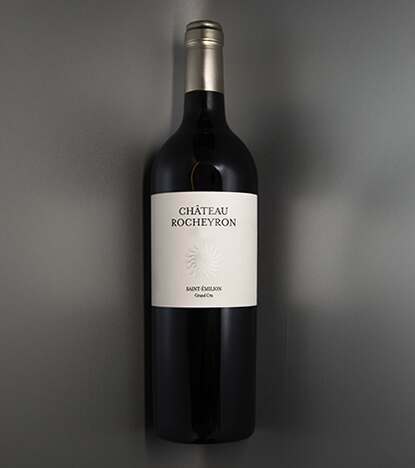
CHÂTEAU ROCHEYRON 2022
Saint-Émilion Grand Cru
Peter Sisseck’s Rocheyron is a blend of 74% Merlot and 26% Cabernet Franc in 2022. Dark cherry fruit on the nose, with plum and blackberry. Great purity of aroma. The palate is both rich and cool, the silky dark berry fruit of the medium-full body offset by driving limestone tension and nerviness.
We tasted the grape varieties separately before tasting the final blend. Peter described the 100% Cabernet Franc sample as “annoyingly good” – by which I assume he meant he wish he had more! (It was rich and dense, with quite brilliant freshness.)
The yield was exactly where Peter wanted it, at 32hl/ha. Fermented at 25-27°C (as a point of interest, Pingus is fermented 23-25°C). The wine then spent 30 days in concrete vats, before being transferred to oak barrels for 14 months of elevage in 35% new oak barrels, followed by 2-3 months in cement vats. 14.5% abv. The equivalent of 21,000 bottles has been produced.
Corney & Barrow Score 18.5
Recommended drinking from 2028 - 2040+
£415/CASE OF 6 Bottles
£145/CASE OF 1 Magnum
£315/CASE OF 1 Double Magnum
£605/CASE OF 1 Imperial
All prices are quoted in bond UK
CHÂTEAU ROCHEYRON
Wine Region
St-Emilion, France
Vineyard
Château Rocheyron
Over the past decade, Peter Sisseck’s Château Rocheyron has risen phoenix-like from vinous obscurity, to become one of the hottest newcomers in Saint-Émilion.Bordeaux was an early staging post in Peter’s career, before moving to Spain and founding Dominio de Pingus. Rocheyron has therefore been a return to his winemaking roots. He has breathed new life into this jewel of a property, perched on the edge of Saint-Émilion’s famous limestone plateau. Rocheyron was the surname of the family who owned the estate in the seventeenth century. The cellar and vineyard team is managed by Régisseur Mathieu Raveraud, who has worked alongside Peter here since the estate was acquired in 2011 and in his quiet, assured way, has been a key ingredient in the success of Rocheyron. The estate has been certified organic since the 2020 vintage and continues in the process of biodynamic conversion, having started the process in 2014. With over a decade of vintages under his belt, you really feel that Peter now has Rocheyron exactly where he wants it. The 2022 is a brilliant expression of Saint-Émilion’s minerality, with sultry, silky fruit and stunning overall poise. I caught up with Peter at Rocheyron in April – do have a watch below…
GUY SEDDON
HEAD OF FINE WINE BUYING
June 2023
The Cellar
2022 VINTAGE NOTES
The winter period was close to the seasonal average (+0.4°C) and above all dry (-30% less precipitation over this period compared to the average). This rainfall deficit continued throughout the season.
Mid-budburst was around 30th March, earlier than in 2021. From 1st to 8th April, episodes of frost followed one another but the later budburst plus the active and passive control (wind machine and candles) greatly limited the damage.
From the end of April, temperatures were warm (+2.5°C compared to seasonal norms) in dry conditions and the growth was active.
It was in these dry and hot conditions of May that the first flowers were observed from the 20th May on our earliest Merlot plots. Flowering was early (identical to 2020), rather explosive and with a large amount of pollen.
The rather cool temperatures until 25th May (21°C on average) rose to 30°C on 30th May and 1st June. A welcome stormy episode with rain helped our vineyard during the second half of June (50 mm).
The substantive work undertaken for years through the practice of biodynamics is bearing fruit because our vineyard has reacted very well to the extreme climatic conditions of the summer of 2022.
The high standards both in the vineyard and in the cellar that drive the teams now allow the different terroirs of the estate to express themselves very precisely.
This hot and dry vintage caused an extremely early start to the harvest, which took place from 7th to 14th September for the Merlots and 26th September for the Cabernet Francs.
The overall balance of the wines was not disturbed by the highish alcohol content (around 15% abv). The vinification needed a very measured extraction in order to avoid harsh tannins (in modern Bordeaux slang, infusion…)
The Cabernets have a bright fruitiness and a very smooth tannic structure. The Merlots are colorful, intensely fruity and flavourful.
The 2022 is the culmination of more than 10 years of intense work, of recovering the vineyard through biodynamics, learning to vinify the rather difficult fruit, with low pH as a driving force. I think with the 2022 we have come very close to the ideal wine that we are looking for. I am immensely proud of this wine and all the work that we have put in, which is now paying off. I am sure 2022 will mark a ‘before and after’ in the history of Chateau Rocheyron.
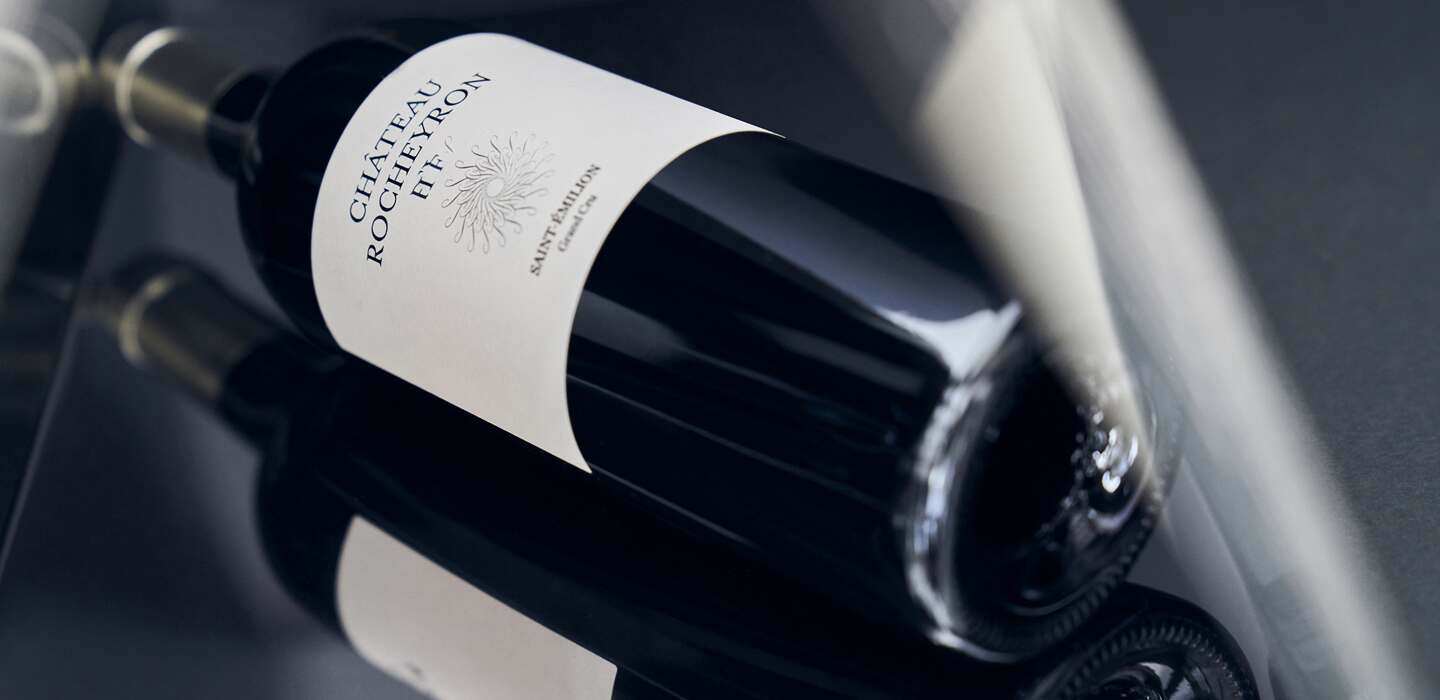
CHÂTEAU ROCHEYRON 2022
CHÂTEAU ROCHEYRON 2022
Saint-Émilion Grand Cru Peter Sisseck’s Rocheyron is a blend of 74% Merlot and 26% Cabernet Franc in 2022. Dark cherry fruit on the nose, with plum and blackberry. Great purity of aroma. The palate is both rich and cool, the silky dark berry fruit of the medium-full body offset by driving limestone tension and nerviness. We tasted the grape varieties separately before tasting the final blend. Peter described the 100% Cabernet Franc sample as “annoyingly good” – by which I assume he meant he wish he had more! (It was rich and dense, with quite brilliant freshness.) The yield was exactly where Peter wanted it, at 32hl/ha. Fermented at 25-27°C (as a point of interest, Pingus is fermented 23-25°C). The wine then spent 30 days in concrete vats, before being transferred to oak barrels for 14 months of elevage in 35% new oak barrels, followed by 2-3 months in cement vats. 14.5% abv. The equivalent of 21,000 bottles has been produced.
Corney & Barrow Score 18.5
Recommended drinking from 2028 - 2040+
£415/CASE OF 6 Bottles
£145/CASE OF 1 Magnum
£315/CASE OF 1 Double Magnum
£605/CASE OF 1