


Domaine Michel Lafarge
Wine Region
Beaujolais, Burgundy
Vineyard
4.1 hectares
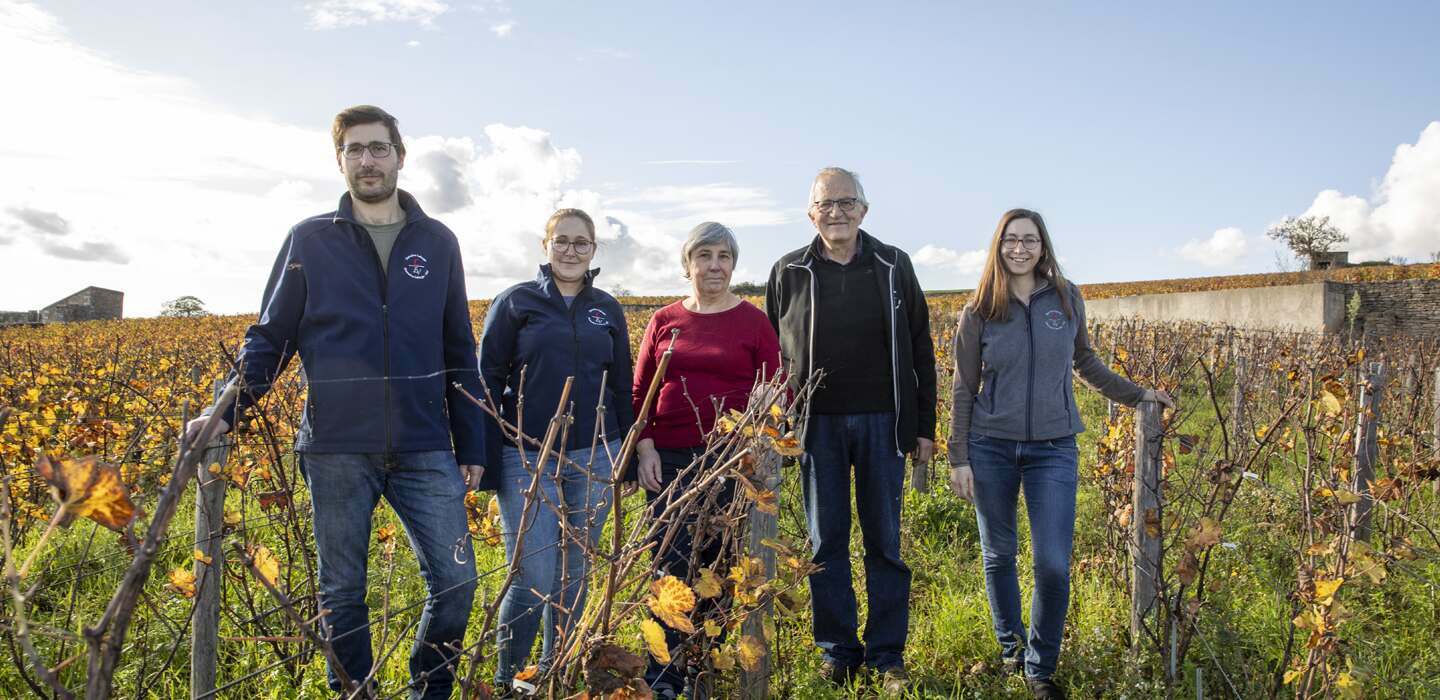
Frédéric (pictured here with Clothilde) has been at the domaine since 1978, taking over fully following the death of his father, Michel Lafarge, in January 2020. Clothilde joined in 2018.
The Clos du Château des Ducs was bought in 1900 by Michel Lafarge’s father. The first wines bottled at the domaine in 1934 included Clos des Chênes, the domaine’s largest Volnay premier cru holding.
The Pinot Noir is 100% destemmed, by hand in the case of the Château du Clos des Ducs and Caillerets. Horses are used as much as possible for ploughing (they are less good at destemming). Recent replantings here include Beaune 1er Cru Grèves (2017) and Volnay 1er Cru Caillerets (2020). The latter was planted in spiral formation, at a density of 11,000 vines per hectare.
I tasted the wines here in late October 2023 with my colleagues Chris Hodgson and Graham Moss, representing the northern and southern C&B UK sales teams respectively. This is always a revealing, thought-provoking tasting – something of a bellwether for the vintage, where snippets on the season and views on the wines are there if you ask but are never forced upon you.
Harvest at Domaine Lafarge started early, on 26th August. 2022 was described by Frédéric Lafarge as a “lovely vintage, in both red and white”. I couldn’t agree more.
GUY SEDDON
HEAD OF FINE WINE BUYING
MARCH 2024
WHITE WINES
BOURGOGNE ALIGOTÉ RAISINS DORÉS
This comes from a 1.2-hectare parcel of 85-year-old vines of Aligoté Doré. Racked at the end of August. It was picked on 17th and 18th September, more than two weeks after the earliest of the domaine’s plots. Bright golden colour. Crunchy and brightly orchard fruited, with a touch of honey. 12.5% abv.
Corney & Barrow Score 17
Recommended drinking from 2025-2028
£125 / case of 6 bottles, in bond UK
MEURSAULT
The domaine has one hectare of Meursault in total. This is from three parcels in the south of the village: Les Vignes Blanches, En Gargouillot and En Marcausse. Ripe white pear and peach aromas lead into a delectable palate of juicy acidity and luminous fruit. This was bottled at the end of March 2024.
Corney & Barrow Score 17.5
Recommended drinking from 2026-2029
£250 / case of 6 bottles, in bond UK
MEURSAULT VENDANGES SÉLECTIONNÉES
This is from two parcels of 70-75 year old vines in the northern part of the village, beneath Santenots du Milieu. The domaine has one hectare of Meursault in total. There is just 30cm of soil above the rock here. This cuvée accounts for around a third of the domaine’s Meursault. Tauter and more acid-driven than the previous wine, it is one for the longer haul. More white-fruited tension here.
Corney & Barrow Score 18
Recommended drinking from 2027-2032
£270 / case of 6 bottles, in bond UK
BEAUNE BLANC 1ER CRU CLOS DES AIGROTS
The domaine’s holdings in 1er Cru Clos des Aigrots, from which both a white and a red are made, date back to 2005. This is the upper part of Aigrots, planted with 37-year-old vines. Bright white peach, with a gently honeyed glow, and a stony-mineral texture to the palate, which finishes chalky and mineral. Lovely wine.
Corney & Barrow Score 17.5+
Recommended drinking from 2025-2028
£365 / case of 6 bottles, in bond UK
RED WINES
BOURGOGNE PASSETOUTGRAIN L’EXCEPTION
This is 50% Pinot Noir, 50% Gamay, inter-planted, from 1.2 hectares of vines close to the Route Nationale just below the village of Meursault. The two varieties tend to reach maturity at the same time. These are very old vines: 94 years of age. It had been racked the week before we tasted, in October 2023. Bright dark cherry aromas herald a luminous palate, framed by very fine tannins. Elegant wine.
Corney & Barrow Score 17.5
Recommended drinking from 2025-2029
£125 / case of 6 bottles, in bond UK
BOURGOGNE PASSETOUTGRAIN ANTHOLOGIE
The Anthologie cuvée was Clothilde Lafarge’s initiative. It is a selection of the best of the Passetoutgrain, from the higher-elevation plots, and is all bottled in magnum. Darker and spicier than the previous wine, this is fuller-bodied and substantial. The more evident, sweetly fruit-coated tannins do not detract from the finesse and elegance. This represents 15% of the domaine’s total Passetoutgrain production.
Corney & Barrow Score 17.5+
Recommended drinking from 2026-2030
£135 / case of 3 magnums, in bond UK
BOURGOGNE PINOT NOIR
The domaine’s Bourgogne Pinot Noir comes from four low-lying plots of vines between the village of Volnay and the Route Nationale. Pale ruby colour, with wild strawberry perfume, leading into a fine-boned palate of crystalline raspberry fruit. This spends 18 months in barrel, as do all the reds.
Corney & Barrow Score 17+
Recommended drinking from 2025-2029
£145 / case of 6 bottles, in bond UK
VOLNAY
This comes from four lower-elevation parcels, located at opposite sides of the appellation (three in the north and one in the south), totalling 1.5 hectares. A pure-fruited, luminous Volnay of fine raspberry fruit, taut acidity and lacy tannins. A citric lift to the palate underscores this wine’s unadorned, wonderfully fresh aspect.
Corney & Barrow Score 17.5+
Recommended drinking from 2025-2030
£265 / case of 6 bottles, in bond UK
VOLNAY VENDANGES SÉLECTIONNÉES
As for its Meursault, the domaine bottles two cuvées of Volnay village. The Vendanges Sélectionnées is from four parcels, all sited just below the line of Volnay premiers crus, making one hectare in total. A step up in concentration and intensity from the regular bottling, this is a confident wine, with a fleshiness of raspberry and red cherry fruit to the mid-palate. The assertive tannins are beautifully fruit-coated. 10% new oak.
Corney & Barrow Score 18
Recommended drinking from 2026-2032
£295 / case of 6 bottles, in bond UK
BEAUNE 1ER CRU CLOS DES AIGROTS
The domaine has a 0.65 hectare plot of nearly 50-year-old vines in 1er Cru Aigrots, the first hill to the north of Pommard, whose heavier soils can make for a substantial, corporeal style. The name comes from the old Burgundian dialect for holly, which thrived at the time the lieu-dit was created. Flinty and strict on the nose, leading into a medium-bodied palate of taut red berry fruit and citrus rind. Zesty and fresh. I suspect this will put on weight with age.
Corney & Barrow Score 17+
Recommended drinking from 2027-2036
£390 / case of 6 bottles, in bond UK
BEAUNE 1ER CRU GRÈVES
The name Grèves comes from graviers – gravel. The domaine’s vines at the heart of this gravelly vineyard were planted in 1921. They are the oldest at the domaine, although a sub-parcel was replanted in 2017, having been grubbed up in 2014, and will be back in the blend next year. Dark, small berried fruit, with a refined phenolic focus – you can feel the grape matter here, very pure and immediate. 15% new oak in 2022, for all the premiers crus.
Corney & Barrow Score 17.5+
Recommended drinking from 2026-2031
£430 / case of 6 bottles, in bond UK
VOLNAY 1ER CRU LES MITANS
Mitans is a perfectly located vineyard, below the village, at the same position on the slope as Champans and Caillerets to the south. Bright red berry fruit, dense but focused, this is a wine of matter and immediacy – again, you can feel the thick grape skins. So pure. This tends to be the first of the premiers crus to open up, according to Frédéric.
Corney & Barrow Score 18
Recommended drinking from 2028-2045
£625 / case of 6 bottles, in bond UK
VOLNAY 1ER CRU LES PITURES
The domaine has a 0.17 hectare holding in Pitures. The climat Pitures Dessus borders Pommard to the north-east and Domaine Marquis d’Angerville’s Clos des Ducs to the south-west. It has whiter (chalkier) soil, resulting in firm tannins. Dark cherry fruit and a foresty aspect, this is a ‘wintery wine’, but it retains a core of sweet bright raspberry fruit. Since 2015, this has all been bottled in magnum which, as Frederic says, lends itself to the longer ageing potential here.
Corney & Barrow Score 18
Recommended drinking from 2029-2045
£615 / case of 3 magnums, in bond UK
VOLNAY 1ER CRU LES CAILLERETS
Caillerets offers the most mineral-driven expression of Volnay. Half of this (0.15 hectares) was replanted in 2020 and will be reintegrated in 2023 for the first time. The new vines have been planted in a spiral formation, at 11,000 vines per hectare, and are worked by horse and by hand. Chalky minerality and bright, sweet raspberry fruit, this is the most mineral wine so far, with a red fruited succulence, supported by filigree tannins.
Corney & Barrow Score 18.5
Recommended drinking from 2028-2040
£655 / case of 6 bottles, in bond UK
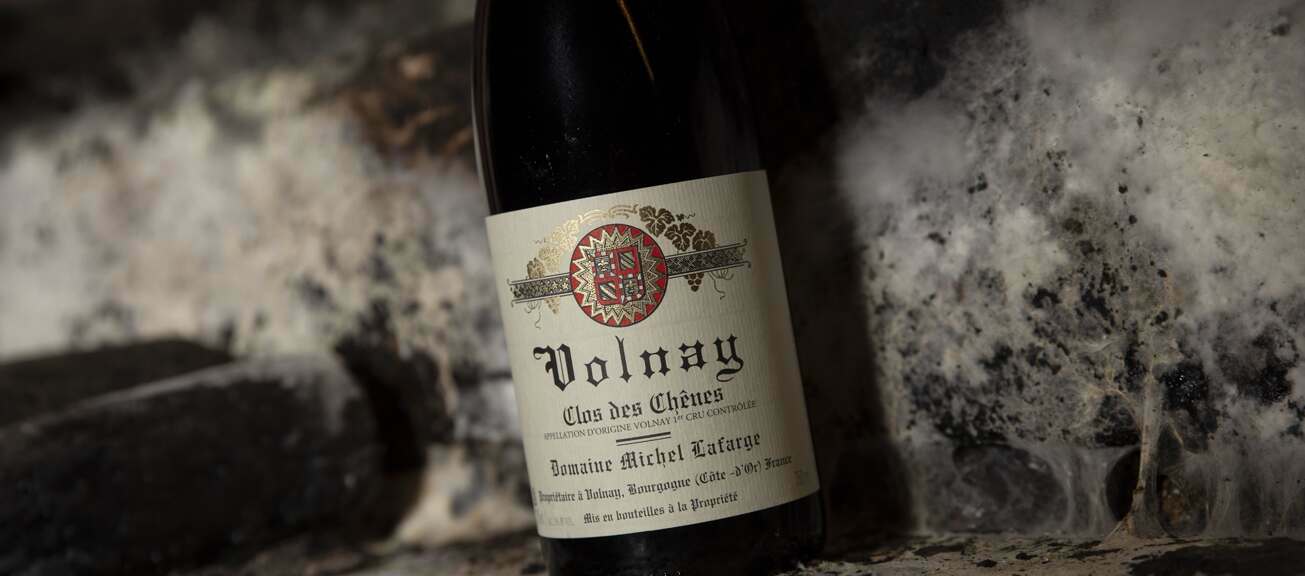
VOLNAY 1ER CRU CLOS DES CHÊNES
In many ways the quintessential wine of the domaine, Clos des Chênes is the most powerful and generous of the premiers crus. It is a large vineyard – the domaine has one hectare of the total 16. It lies to the south of Taillepieds, at the same level on the slope, and above Caillerets. The soil here is red and iron-rich. The ripe cherry, raspberry and plum fruit is open and charming, with an assured vigour and almost a swagger about it in 2022. Luminous and bright, with fine, chalky tannins.
Corney & Barrow Score 18 - 18.5
Recommended drinking from 2028-2039
£730 / case of 6 bottles, in bond UK
VOLNAY 1ER CRU CLOS DU CHÂTEAU DES DUCS MONOPOLE
The Clos du Château des Ducs Monopole is immediately behind the domaine, occupying a central position in Volnay. It is worked with horses, with destemming done by hand. Aromas of peonies and orange zest lead into a pure, almost translucent palate of fine raspberry fruit. This is the most aérien of the domaine’s wines in 2022, whose mouth-filling rose petal flavours are framed by filigree-fine tannins and sustained by poised acidity.
Corney & Barrow Score 18.5 - 19
Recommended drinking from 2027-2040
£895 / case of 6 bottles, in bond UK