

Bordeaux 2025En Primeur
2025 Releases
Daily Commentary
Welcome to the C&B Bordeaux 2025 En Primeur Hub. Here you will find all the information you need on the latest releases, regional insights, the 2025 vintage report and more.
Throughout the campaign, we will share insider perspectives to help you navigate each stage. Our daily commentary offers our candid thoughts on the day’s releases, while our blogs and podcast provide more in-depth expertise. Over the coming weeks, we will be sending regular updates on the vintage and key offer launches. To stay fully informed, ensure you are following our Instagram Broadcast channel and are opted into our marketing emails.
Our buying team has just returned from an extensive period of tasting in Bordeaux and is poised to guide you through the imminent releases. All wines will be listed in bond (GBP), ex VAT and duty.
In the meantime, we have identified our favourite and highest-scoring wines. Although we won’t know the prices until the day of release, we have analysed previous release prices to determine our fair price range. You can find the full list on our pre-order form. If you wish to reserve wines from these châteaux ahead of the official release, please fill out the form. Should the release prices fall outside our fair price bracket, we will not process the order and will be in touch to discuss next steps.
While we await the 2025 releases, you can refer to the 2024 vintage information for a flavour of what to expect. For further assistance, please don’t hesitate to contact the team via our contact form, or call us on 020 7265 2430 (UK), +852 3694 3333 (HK), +65 6221 8530 (SG).
Bordeaux 2025 offers
CHÂTEAU TROTANOY 2025 VINTAGE, EN PRIMEUR
CHÂTEAU LES CARMES HAUT-BRION, 2025 VINTAGE EN PRIMEUR
CHÂTEAU ROCHEYRON 2025 VINTAGE, EN PRIMEUR
TERTRE ROTEBOEUF, ROC DE CAMBES & L’AURAGE – 2025 VINTAGE
ETS. JEAN-PIERRE MOUEIX 2025 VINTAGE EN PRIMEUR
Explore Bordeaux
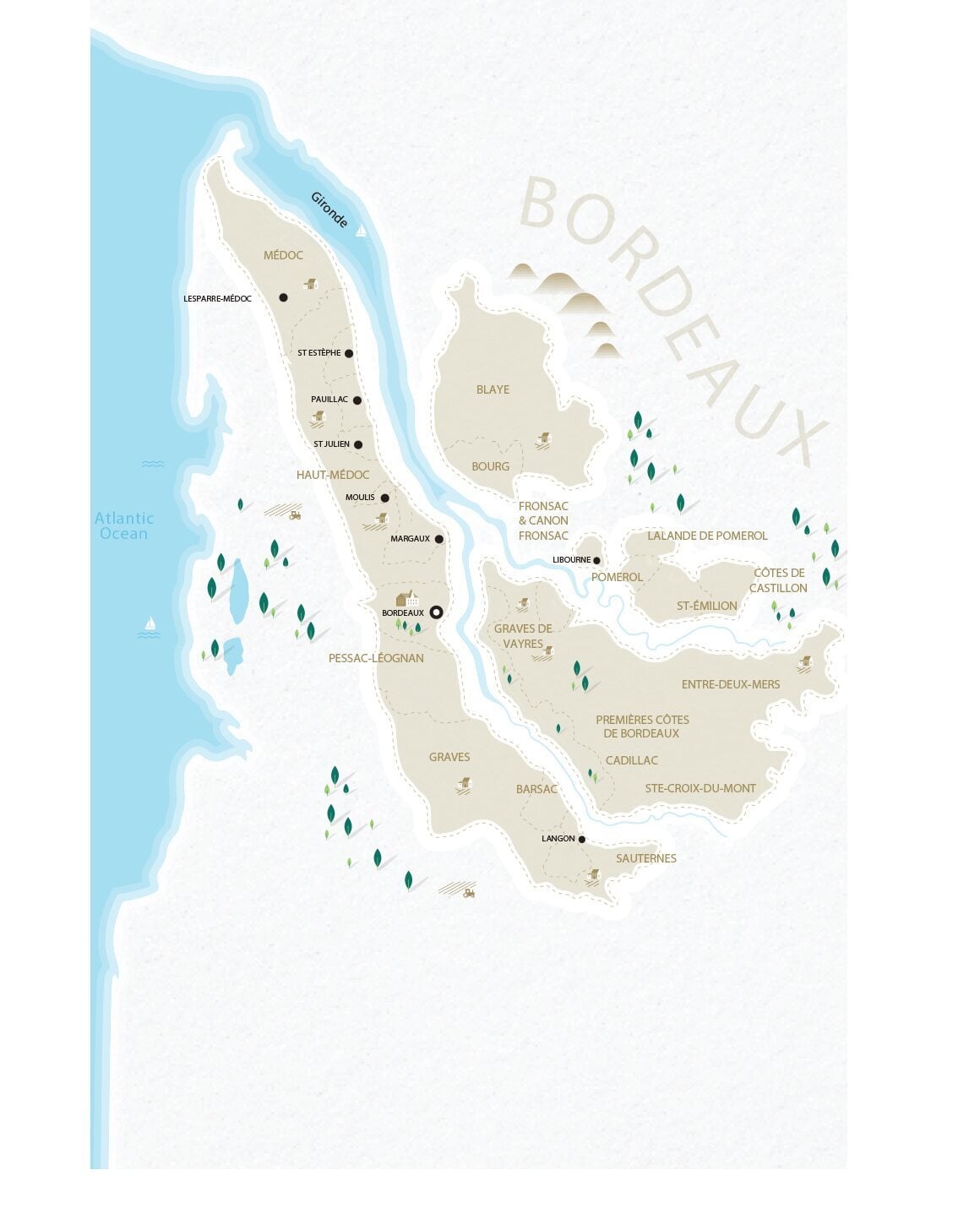
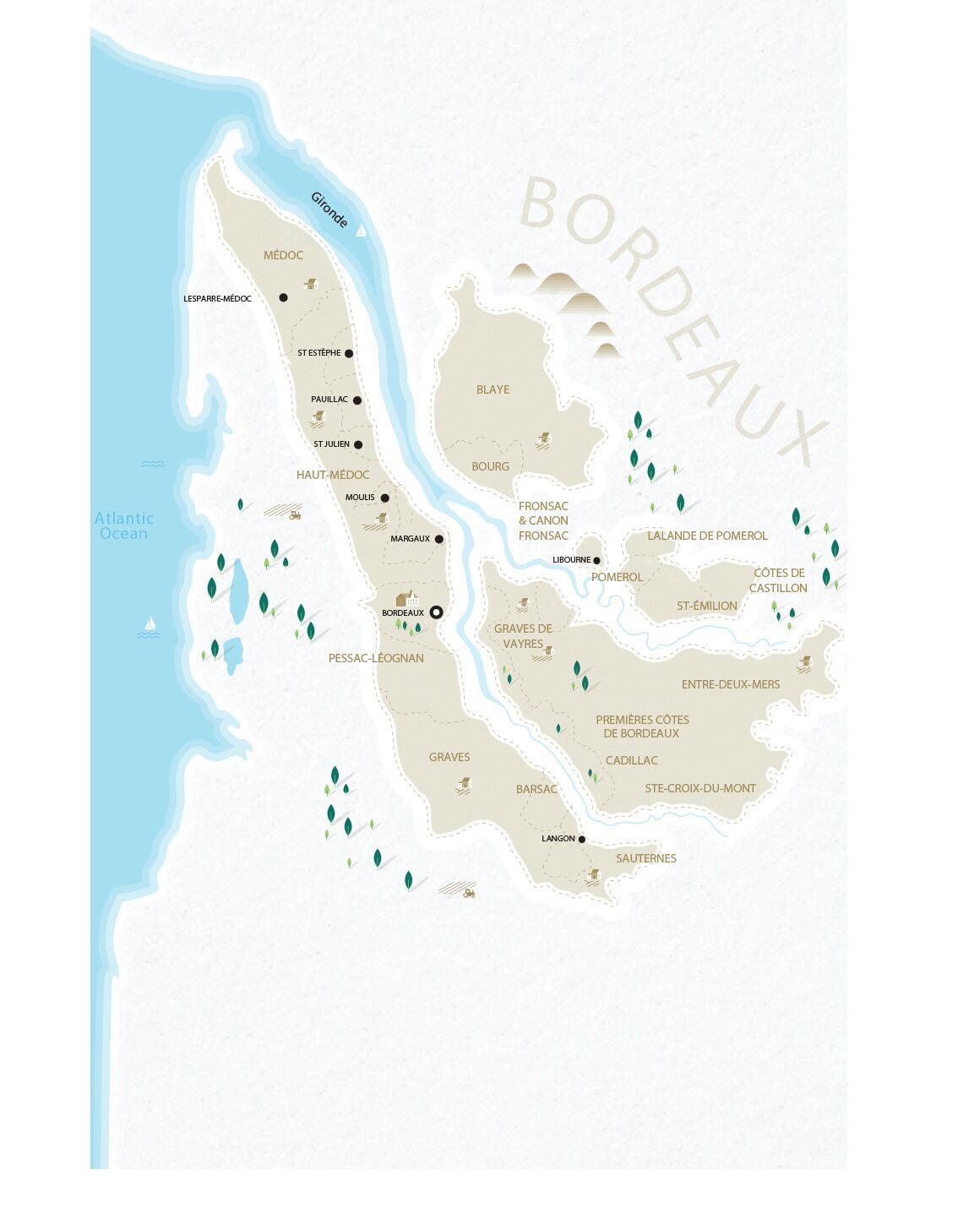
Bordeaux Map
Exclusive Region
Roc de Cambes (1)
Bourg
Bourg lies at the confluence of the Garonne and Dordogne rivers. Here the owner François Mitjavile discovered a property where there are resonances of his renowned Saint Emilion Grand Cru estate Tertre Roteboeuf - though on a larger scale. François' philosophy involves an instinct and understanding of the rhythms of the vineyard. There is no room for dogma here. Yields are generally low - but that is not the goal - nor is late harvesting, for which has gained a reputation. He picks when he believes the grapes are ready to be picked and that might be before or after others depending on the vintage. The Côtes de Bourg is a region with great, but often unrealised, potential and François very individual way of working soon unleashed a wine which sits easily amongst the greatest wines Bordeaux produces. Roc de Cambes sits in a natural amphitheatre overlooking the Gironde estuary. It is planted on the most highly reputed slope of the Côtes ("les Croutes") where the heat of the sun on the slope is regulated by the effects of the estuary, permitting regular growth and wonderfully ripe, concentrated fruit.
L'Aurage (2)
Côtes de Castillon
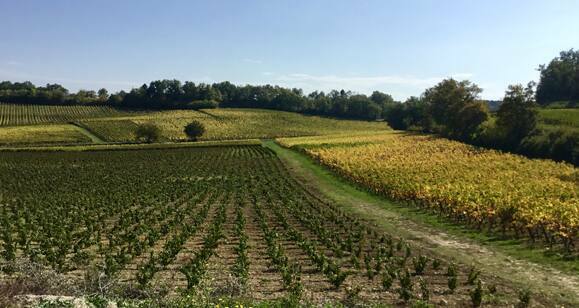
Louis Mitjavile, known as Loulou, is François Mitjavile’s son. He is the winemaker of L’Aurage, which he owns with his wife Caroline. The vineyards of Castillon-Côtes de Bordeaux lie on an outcrop of the Saint-Émilion limestone ridge and represent some of the best value in Bordeaux. This is a beautiful enclave of wooded hillsides. The plantings are 95% Merlot and 5% Cabernet Franc, although the percentage of Cabernet Franc is diminishing, as all Louis’ replantings are now Merlot. The oldest vines are 17 years old. Loulou places great importance on “couture-like” winter and early-spring vineyard work. Loulou recently installed new temperature regulation in the cellars, which maintains a minimum 15-16ºC. He has found that this enables him to achieve roundness and richness more easily in his wines. L’Aurage spends 18-20 months in oak, which is 100% new, from the Radoux cooperage.
Clos St-Martin (3)
St-Émilion
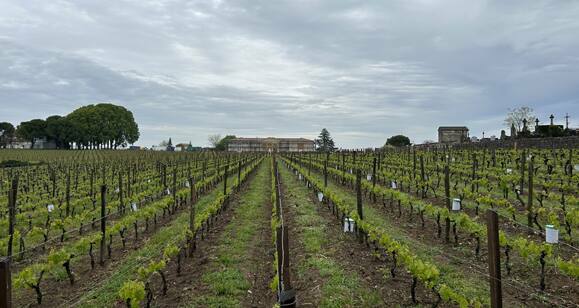
Clos St-Martin is one of three Saint-Émilion estates owned by the Reiffers family — the sister properties being Côte de Baleau and Grandes Murailles. This is a jewel of a property at a mere 1.33 hectares — not much bigger than a rugby field — Saint-Émilion’s smallest classified growth. The Reiffers have had vineyards since 1643 — so the weight of responsibility on Sophie Fourcade, currently at the helm, could be a hefty burden, but it is lightly borne. She is supported by consultant winemaker Michel Rolland. The philosophy of the family is to respect the terroir and rigorously pursue quality. The vineyard enjoys an excellent location upon the renowned limestone plateau with southwestern exposure and is surrounded by four of the grands crus — Beausejour Duffau Lagarosse, Beausejour Becot, Canon and Clos Fourtet. The vineyard density is 5,000 vines per hectare, planted to 75% Merlot, 15% Cabernet Franc and 10% Cabernet Sauvignon.
Château Rocheyron (4)
St-Émilion
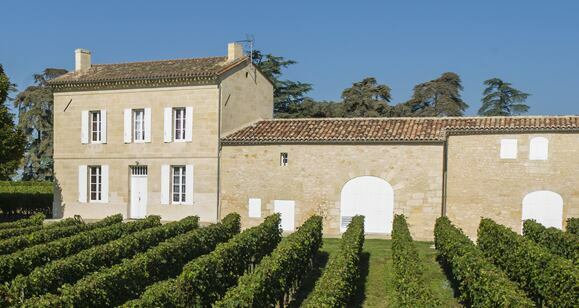
Rocheyron is a cool site. So cool, in fact, that its vines escaped the infamous 1956 frost, which decimated much of Saint-Émilion and Pomerol. The sap had still not started moving in Rocheyron’s vines, which remained in their dormant, protected phase. Nearly 70 years later, Rocheyron’s cool terroir is again proving a boon in the age of climate change. You can see how its ability to retain freshness and its enviable location on the edge of Saint-Émilion’s famous limestone plateau, appeal to Peter Sisseck. Bordeaux was where Peter’s winemaking career began, before he moved to Spain and founded Dominio de Pingus. His return to take on Rocheyron in the 2010 vintage was therefore a completing of the circle. Rocheyron was the surname of the family who owned the estate in the seventeenth century. The cellar and vineyard team is managed by Régisseur Mathieu Raveraud, who has worked alongside Peter here since the estate was acquired in 2011 and in his quiet, assured way, has been a key ingredient in the success of Rocheyron. The estate has been certified organic since the 2020 vintage and continues in biodynamic conversion, having started the process in 2014. This is a château that has found its path – the past few vintages have produced beautiful wines which hit the sweet spot between aroma and density, with that underpinning limestone tension.
Tertre Rôteboeuf (5)
St-Émilion
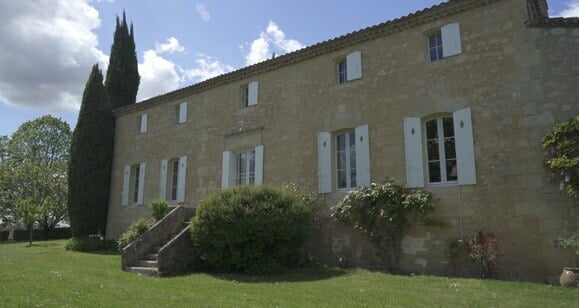
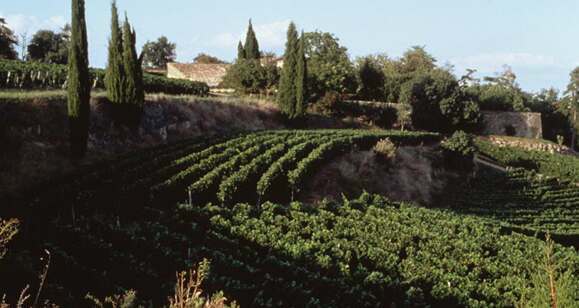
Tertre-Rôteboeuf lies 2km southeast of Saint-Émilion on a very special, peninsular extension of the slope which houses Châteaux Pavie and Larcis-Ducasse. This extends to a hillock, the hauts de côte, with the slopes beneath, pleines côtes, which encompasses the lieu-dit Rôteboeuf. A mere 6 hectares in size, the rise to fame of Tertre-Rôteboeuf from relative obscurity has been dramatic. Even without a grand cru classé title, it is one of Saint-Émilion’s cult wines. This turnaround has been spearheaded by a unique individual, François Mitjavile, aided and abetted by his wife Miloute and, increasingly, his son and daughter Louis and Nina.During the early seventies, François and Miloute had successful careers in Paris but regularly visited Miloute’s vigneron family members in Bordeaux. This included her father, who at the time, owned Le Tertre and rented it out to cousins. At this point, they knew nothing about viticulture or vinification, money was scarce and there was no cellar, winemaking paraphernalia or even barrels at the property — minor inconveniences — but they elected to take on Le Tertre vineyard and leave their city lifestyle behind. Their new venture began with a lengthy two-year stage at Château Figeac, where François learnt the practical side of the vineyard and cellar. Château Le Tertre was then returned to family control after the 1977 vintage. The couple decided to differentiate themselves from the other Tertres by adding Rôteboeuf (literally translating as belching ox) to the name, alluding to the cattle which used to graze the land. This addition also reflects the different slopes of the property — Rôteboeuf for the lower slopes and Tertre for those higher up, surrounding the house and garden. Finally, Château Le Tertre-Rôteboeuf was en route. There was a name, a vineyard, a base of experience on which to build and a potentially lovely house, with inspirational views over the Dordogne and across to the Entre-deux-Mers.
Château Trotanoy (6)
Pomerol
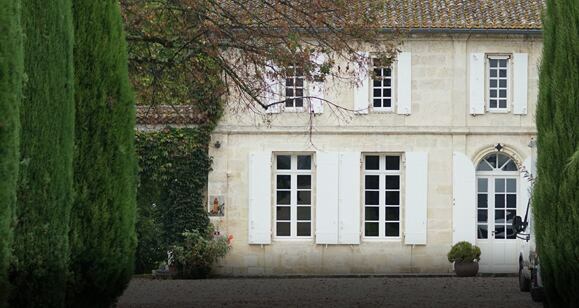
Only the central plateau was planted with vines at that time, whilst on today’s map of Pomerol, Trotanoy sits almost dead centre, due north of the village of Catusseau. By the 19th century, Trotanoy had the twin distinctions of being Pomerol’s joint-largest volume producer and being ranked second in quality – behind Vieux Château Certan and ahead of Petrus. Trotanoy can therefore be seen to owe its longstanding importance in the Pomerol fabric to both its historical size and its increasingly dominant geographical location. Various plots were sold off over the years to settle inheritance expenses. One former parcel forms the core of today’s Château Latour à Pomerol. By 1908, the holdings had been reduced to a still-fairly-substantial 18 hectares. Jean-Pierre Moueix purchased Trotanoy in 1953. This was both his most significant acquisition to date and the turning point in the estate’s history. Under the steely resolve of Jean-Pierre and later the nurturing hand of his son Christian Moueix, Trotanoy rose to the position it holds today.
Château Latour â Pomerol (8)
Pomerol
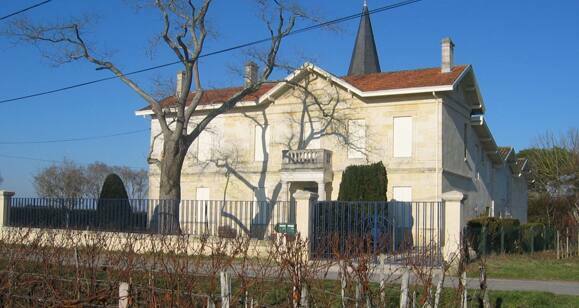
Château Latour à Pomerol is situated near the church of Pomerol on a plateau 130 feet above sea level, where the best grapes of the region are cultivated.It is a winegrowing estate consisting of two main plots: one with light, loam-based soils, which is adjacent to the well-known Chateau La Grave à Pomerol estate, and the other with deep beds of gravel and clay. This is the perfect environment for the vines, which have an average age of 35 years or more, to produce grapes with a diverse spectrum of flavours, thus imparting a complex and appealing structure to the resulting wine. Despite having a profusion of legendary vintages under its belt, little is known of the excellent property – an insider’s wine. Since 1963, Ets. J-P Moueix, one of Bordeaux’ top wine producers and merchants, has acted as agent for its wine and has been in charge of the estate’s careful vine cultivation and winemaking. The resulting wine boasts stellar provenance. Latour à Pomerol has crafted a succession of successful and well-balanced vintages and consistently produces very fine wines.
Château La Grave à Pomerol (9)
Pomerol
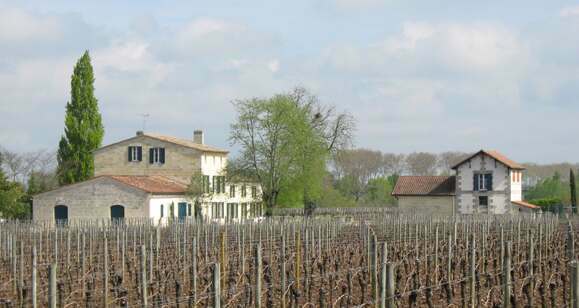
Château La Grave à Pomerol (known until 1992 as La Grave Trigant de Boisset) lies to the northwest of the Pomerol plateau, bordering Lalande de Pomerol. This is owned by Christian Moueix and is home to Laurent Navarre, managing director of Ets. J-P Moueix so it gets more than its fair share of scrutiny. The vineyard is planted on gravel soils with some clay, with vines of an average age of 30 years, which makes for wines with an elegance and lightness of touch – less of the more obvious power and structure seen in other wines from the plateau. Through very rigorous crop thinning and selection, the Moueix team produce rather seductive wines with charm and finesse. The magnum format will enjoy greater longevity but stylistically the base wine is the same.
Château Les Carmes Haut-Brion (9)
Pessac-Leognan
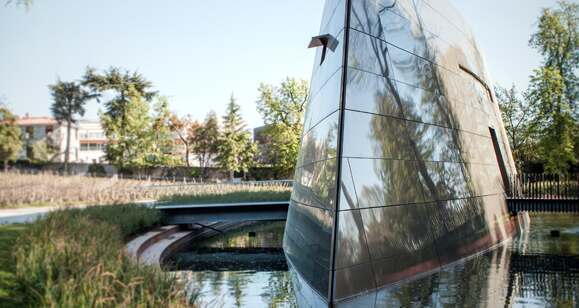
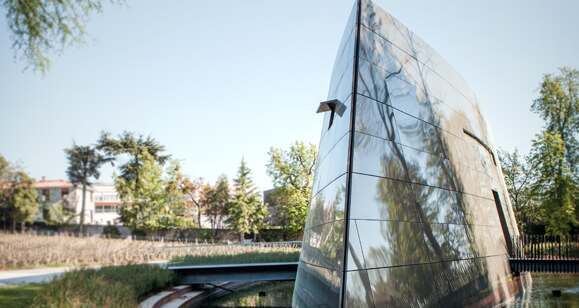
In 1584, Jean de Pontac, lord of Haut-Brion, donated several acres of meadows and vineyards to the Carmelite Order. These monks, quite appropriately, took their name from Mount Carmel, translating from Hebrew as 'God's vineyard', and watched over the vines here for nearly two centuries. Turbulent times later eschewed when the estate was confiscated during the French Revolution before it was acquired by Léon Colin in 1840. He worked hard to revive the estate, which was continued by his descendants, the Chantecailles. They helped transform Les Carmes Haut-Brion into the beautiful estate it is today, adding a château and landscaped park before selling it to French property developer Patrice Pitchet in 2010. Just two years later, Patrice enlisted Guillaume Pouther as director and winemaker of the property. A year later, he made his first complete vintage here and has been completely devoted to the estate ever since. In 2016, an unusual-looking winery was built, encompassing estate-of-the-art equipment to allow the estate to embark a new era of winemaking. The winery appears as a wall of metal emerging from River Peugue - echoing the shape of ship's bow, it is a reminder of the region's great seafaring history.
Bordeaux 2025 blogs
Read all our latest blogs about the Bordeaux 2025 vintage.
FAQ
EN PRIMEUR EXPLAINED