FrenchWines
11
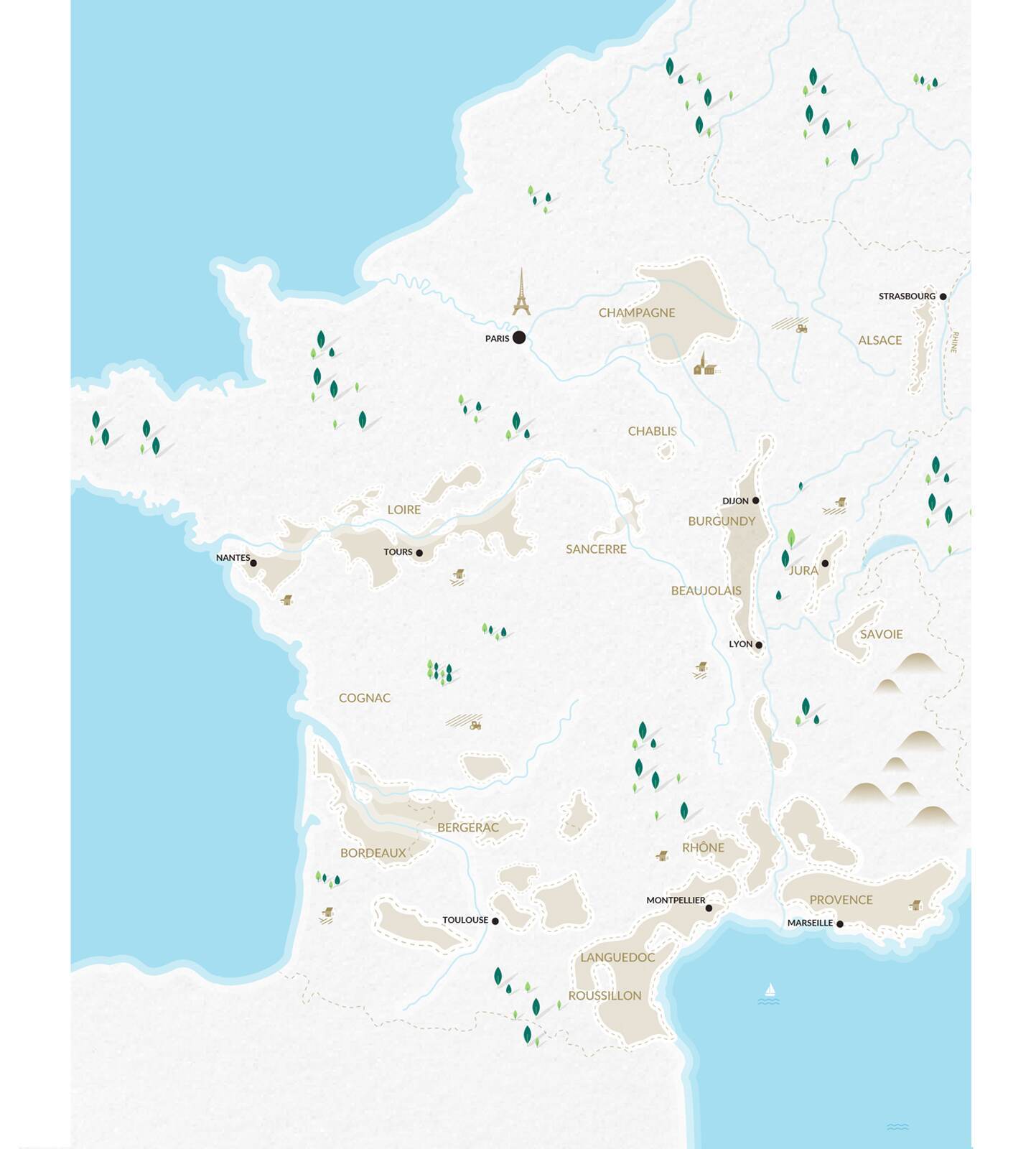
Major wine regions across France

2
Consistently among the top two largest wine producers in the world
2,600
The number of years that France has been producing wine
French producers

Exclusive Region

Champagne Labruyère
Champagne
It is difficult to imagine how such a punctilious overseer of all the estates can cover so much ground, Moulin-à-Vent, grands, and premiers’ crus estates traversing the length of Burgundy and a very fine estate, Château Rouget, in Pomerol. Edouard Labruyère benefits from some harvest date variation but the whole harvest process is exacting to say the least… and he is a hands-on kind of guy. Many would call a halt to any further projects, but Edouard prefers the road less travelled by. He has long felt that Champagne, even if a UNESCO site, is a large appellation with a myriad different terroir, lost in the firmament of brands. It is clear that the Montagne de Reims ought to be a great ambassador, but it has been rather overshadowed by the Côte des Blancs. In fact, the Montagne has so much to offer, a curved ridge with many aspects and geologies, capable of great complexity. Believing in terroir, steeped in the Burgundian ideal, Edouard is aiming for the skies, determined to showcase individual plots – much to the amusement, I am sure, of incredulous neighbours. There is currently an increasing interest in 'grower' champagne and who has better legitimacy to talk about the concept of terroir than a Burgundian grower?

Champagne Guy de Chassey
Champagne
The family has a long history dating back to 1470. In 1529, Nicolas de Buretel was ennobled and granted a coat of arms emblazoned with two unicorns, a coronet and a bag of flour – a tribute to their milling ancestry. Vinegrowing became a central activity of the family in the 19th century. The 20th century witnessed the achievements of Lucien Beaufort, the 3rd generation and a pioneering spirit. He became one of the first ‘Récoltant-Manipulants’ from Champagne (hence the RM licence stated on the bottle) and was an intrepid entrepreneur, already exporting to far-flung places. The 1960s marked the foundation of the brand as we know it today by Mr Guy de Chassey. He was joined in 1990 by his daughter Marie-Odile, who then took over the business in 1993, modernized the winery and developed exports. Marie-Odile’s daughter, Ingrid, joined forces in 2003, having dreamt from a young age of ‘making wine like her grandfather’. Today, Ingrid is Guy de Chassey’s ‘superwoman’ – overseeing every single aspect from growing to selling, with endless passion, care and expertise.

Champagne Delamotte
Champagne
A great Champagne is, first and foremost, a great wine. This is the challenge that drives Champagne Delamotte and its sister house, the mythical Champagne Salon, both of which are located in Le Mesnil-sur-Oger, a unique terroir and one of the most prized grand cru villages of the Côte des Blancs, renowned for the purity, freshness and definition of its wines. Spanning a history exceeding 260 years, Delamotte is the fifth oldest Champagne house in the region. Despite its remarkable and enduring heritage, it is a name that flies somewhat under the radar. Under the astute stewardship of Didier Depond since 1997, a tireless approach to vineyard husbandry and meticulous cellar practices remain stringent and paramount to the core Delamotte philosophy.

Domaine Trapet
Côte de Nuits
Corney & Barrow has imported the wines of Domaine Trapet since the 1960s and this family-run domaine continues to thrive to this day. Following the return of Jean-Louis and Andrée Trapet’s sons Pierre (born 1992) and Louis (1994), there are three generations actively involved at present. Keeping an eye on them all is patriarch Jean Trapet. The domaine’s enviable holdings are centred on Gevrey Chambertin, where the domaine is based. Delve below the grands and premiers crus and you find the heart of this biodynamic estate: village Gevreys and Marsannays of luminescent fruit and soaring perfume.

Domaine Julien Braud
Loire
Julien is the 6th generation of his family to be a vine grower in the area – his father is at the helm of the reputed family estate “Fief aux Dames”. After his winemaking studies and a few vintages at the family estate, Julien had the dream to set up his own venture. Idealist and meticulous, Julien had the ambition to produce refined and characterful wines paying tribute to the indigenous Melon de Bourgogne and highlighting the potential of the region’s exceptional terroir. So in 2012, he started with a modest 3 hectare vineyard in the heart of Monnières, and today, his 13 hectares of vineyards are fully certified organic.
Julien and his wife Apolline spend the majority of their time in the vineyards “where the wine is made”, limiting intervention at the winery and let the wine express the terroir.

Clau de Nell
Loire
They were immediately struck with the quality of the site, the age of the vines and the biodynamic principles that had been implemented in the vineyards since 2000. Anne-Claude being one of the foremost proponents of biodynamic viticulture at the great Domaine Leflaive and founder of CLAC — a venture designed to support and promote biodynamic growers in exporting their wines — Clau de Nell proved far too tempting to pass up, and in 2008, in a bid to save the property from insolvency, Anne-Claude and Christian took the decision to purchase it. Following Anne Claude’s death in 2015, Christian continues to run the estate alongside winemaker Sylvain Potin and Christian’s daughter Claire who oversees sales and marketing. One of the guiding principles at Clau de Nell is Anne-Claude’s firm belief that winemakers should place nature at the heart of what they do, and wherever possible harmonise with the natural environment rather than resist it.

Domaine du Nozay
Loire
Run by the incredibly passionate ‘de Benoist’ family, Domaine du Nozay dedicates the entire production of its boutique winery solely to the pursuit of the perfect Sauvignon Blanc. Convinced of the benefits of organic and biodynamic farming, they were certified organic in 2011 and biodynamic in 2017. Respecting the environment, vines, and soils, Domaine du Nozay hopes to achieve the heights of quality and produce some of the most exceptional Sancerres. Philippe de Benoist built the vineyard himself in 1970, but today his son Cyril oversees all viticulture and winemaking aspects of production. He is passionate about their vineyard and even has a small weather station located in the heart of the vineyard specifically for this purpose. The house itself, a gorgeous, colourful 17th-century stone building with a frescoed cellar and hunting paraphernalia all over its walls, helps to portray the individuality and enthusiasm of the wine and its makers.

Domaine de l’Épine
Loire
The 3.8 hectares vineyards lie in Quincy in the Loire Valley, close in style and location to the famous appellations of Sancerre and Pouilly-Fumé. The climate in Quincy is classified as continental, generally cold and dry in the winter, mild and wet in the spring, sunny and warm in the summer then soft and humid in autumn. Soils are rich in sand and gravels, conducive to the development of richer Sauvignon Blanc when compared to more mineral styles of Sancerre and Pouilly Fumé, grown widely in calcareous and Silex soils. Vines are pruned in single Guyot from December to March. In spring, once frost risk has passed, shoot thinning is carried out to remove excessive vegetative growth. Grapes are tasted regularly to determine ideal ripeness for harvesting, which can be spread over two to three weeks between mid-September and early October. Grapes are gently harvested, and a sorting table helps to select the best berries for wine production.

Burgundy Producers
One of the most celebrated wine regions in the World

Domaine du Pélican
Jura
The 3.8 hectares vineyards lie in Quincy in the Loire Valley, close in style and location to the famous appellations of Sancerre and Pouilly-Fumé. The climate in Quincy is classified as continental, generally cold and dry in the winter, mild and wet in the spring, sunny and warm in the summer then soft and humid in autumn. Soils are rich in sand and gravels, conducive to the development of richer Sauvignon Blanc when compared to more mineral styles of Sancerre and Pouilly Fumé, grown widely in calcareous and Silex soils. Vines are pruned in single Guyot from December to March. In spring, once frost risk has passed, shoot thinning is carried out to remove excessive vegetative growth. Grapes are tasted regularly to determine ideal ripeness for harvesting, which can be spread over two to three weeks between mid-September and early October. Grapes are gently harvested, and a sorting table helps to select the best berries for wine production.

Bordeaux Producers
France is without doubt the world’s supreme wine-producing country, unmatched for the finesse, style and sheer diversity of its wines.

Plaimont
Gascony
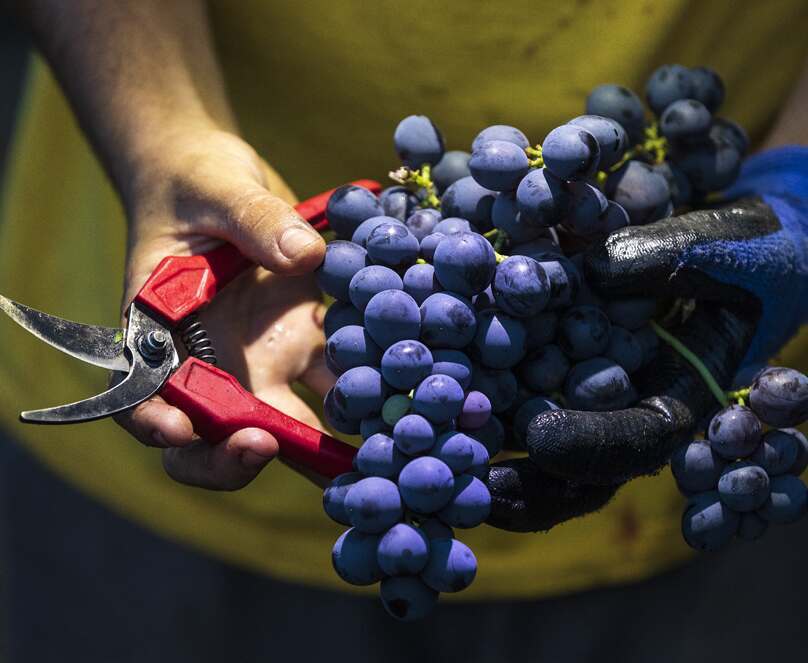
The ancestral vineyard, which dates back to 1150 and the Kingdom of Navarre, has been recently renovated and comprises 12 parcels over 14 hectares. It is located on clay-limestone and pebble clay slopes. The vines are made up of Tannat, Cabernet Sauvignon and Cabernet Franc for Madiran wines, and Petit Manseng and Gros Manseng for Pacherenc du Vic-Bilh. Tannat is originally from French Basque Country and has been grown as the main grape variety of the Madiran region, in the foothills of the Pyrénées mountains, since the 17th century. Mild winters, stormy summers and dry sunny autumns paired with the proximity to the Pyrenees all contribute to the optimal maturation of the grapes. Hot days are ideal for fruit concentration and cool clear nights to retain freshness. This parcel is characterized by its south & south-westerly exposure which confers optimal maturing conditions to the grapes – especially Tannat a late ripening grape. The winemakers of Saint-Mont follow sustainable practices in the vineyards supported by constant monitoring and modern equipment. Harvest is done completely by hand. They are then taken immediately to the winery to be pressed in order to preserve the freshness of the fruit.

Vignobles Gonnet
Côtes du Rhone
There have been vines since Roman times at this magnificent family Domaine which was developed in 1950 by Etienne Gonnet – the one time mayor of the village of Bédarrides and father of current owners Jean and Michel Gonnet. For over 30 years, Jean and Michel have overseen operations, constantly improving their winemaking methods to develop full-bodied, concentrated wines that express their terroir perfectly. Since 2006, their sons Guillaume and Bertrand are in charge, bringing their own skills and international experience to the Domaine. In 2002 the estate acquired a further 20 ha of land in the Côtes du Rhône area and the new appellation (since 2005) of Côtes du Rhône ‘Signargues’, situated at Domazan in the Gard, South of Châteauneuf-du-Pape. This area is well-known for its fantastic wines and is already yielding exciting results for Vignobles Gonnet.
Tardieu-Laurent
Rhône
The brainchild of Michel Tardieu and well-known Burgundian producer Dominique Laurent, Maison Tardieu-Laurent was set up in 1994 and made waves internationally from the outset. Inspired by a Burgundian philosophy and approach, Maison Tardieu-Laurent is built on the foundation of sourcing old vine fruit from iconic terroir to produce wine for the connoisseur.
Château Barbeyrolles
Provence
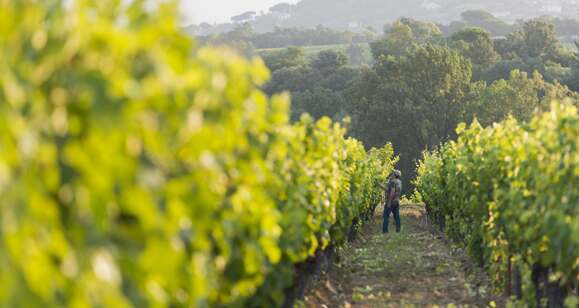
Château Barbeyrolles' 12-hectare vineyards are located near the Mediterranean Sea, nestled in the Maure Hills on the St-Tropez peninsula. The vines, averaging around 40 years of age, thrive in a climate characterized by mild winters and very warm, dry summers with abundant sunshine. The soils of the Maure Hills are primarily composed of crystalline bedrock, featuring shale derived from Silurian schist—which retains heat and water to support optimal ripening—and Permian red sandstone, which provides excellent drainage. These nutrient-poor soils encourage the vines to develop deep root systems, contributing to the wine’s complexity. The estate follows a philosophy of organic and biodynamic viticulture, employing sustainable practices such as manual ploughing, the use of animal manure, and copper treatments, and has avoided chemical herbicides for three generations.
Château la Tour de l’Evêque
Provence
Château La Tour de l’Evêque, was acquired by Gabriel Sumeire in 1958, the first in a long line of winemakers, and still belongs to the family estate. Formerly belonging to the clergy, the property was the summer residence of the bishops coming from Toulon. Roger Sumeire, who had already been put in charge of the family estates in 1946, started to work at Château La Tour de l’Evêque with his father, Gabriel, and today his daughter, Régine, is ensuring the continuity of the family’s spirit and work on the land. Régine made huge investments in 2010 in order to extend their cellar and install state-of-the-art equipment that allows bottling by gravity. Their pursuit of quality goes hand in hand with respect for traditional viticulture and as a result, the vineyards are run according to organic principles.

La Pèira
Languedoc Roussillon
La Pèira is located between the villages of Sainte-Brigitte and Jonquieres, in the Terrasses du Larzac appellation, at 120 metres above sea level. Although the appellation dates from just 2005, this is a region with a long winemaking history.

Domaine Morin Langaran
Languedoc Roussillon
Domaine Morin Langaran is located in Mèze and dominates the salty banks of Lake Thau, well known for the cultivation of oysters. This Domaine stretches over 58 hectares. The owners, the family Morin, have been winegrowers for several generations and their dedication and passion show brilliantly in their wines. The area for the production of the AOP Picpoul de Pinet is the largest white wine region in Languedoc. The plot of Domaine Morin Langaran is located in the south of the appellation, bordering Lake Thau, on rather poor soil covered with lime concretions. Piquepoul – or Picpoul - is an old Languedoc grape variety that has been found on the banks of Lake Thau since antiquity; it is late-ripening and, when planted in a dry climate, it takes advantage of the humidity of the late season to complete its maturation.

Celliers Jean d'Alibert
Languedoc Roussillon
In the 17th century, Abbot Jean d’Alibert played a key role in making Minervois marble renowned around the world. Today, nearly four centuries later, a cooperative bearing his name is striving to achieve similar acclaim—this time with wine. Nestled in the picturesque hills between Narbonne and Carcassonne, Celliers Jean d’Alibert is one of the region’s oldest and most quality-driven cooperatives. Drawing from some of the Languedoc’s most diverse and expressive terroirs, it unites nearly 1,000 winegrowers who collectively cultivate over 6,000 hectares of vineyards. Spanning fifty communes across Hérault and Aude, the cooperative produces close to 400,000 hectolitres of wine each year.
French Wine History
France’s winemaking heritage stretches back more than 2,600 years, beginning when Greek settlers established the first vineyards along the Mediterranean coast. The area now known as the Languedoc is widely regarded as the cradle of French viticulture, with archaeological evidence of vine cultivation near Narbonne and Agde as early as the 5th century BCE. The Romans later expanded viticulture across Gaul, laying the foundations for many of today’s most celebrated regions, including Bordeaux, Burgundy and the Rhône Valley.
During the Middle Ages, monastic orders played a crucial role in refining vineyard practices and identifying the finest sites. Their meticulous record keeping helped shape the early understanding of terroir — an idea that remains central to French wine identity. By the 17th and 18th centuries, French wines were already prized across Europe, and by the Enlightenment era they had become the international benchmark for quality. Historically, wines from France have been regarded as the most prestigious in the world, a status reflected in their enduring dominance at fine wine auctions.
This prestige is exemplified by the most expensive bottle ever sold: a 1945 Romanée Conti, which achieved $558,000 at Sotheby’s in 2018. Its rarity and provenance encapsulate the heritage and craftsmanship that define France’s greatest wines.
To protect this legacy, France introduced the Appellation d’Origine Contrôlée (AOC) system in 1935, formalising rules around grape varieties, yields and geographical boundaries. Today, this framework — now aligned with the European AOP system — continues to safeguard authenticity while allowing regions to evolve in response to changing climates and modern winemaking philosophies.
French Wine Classification
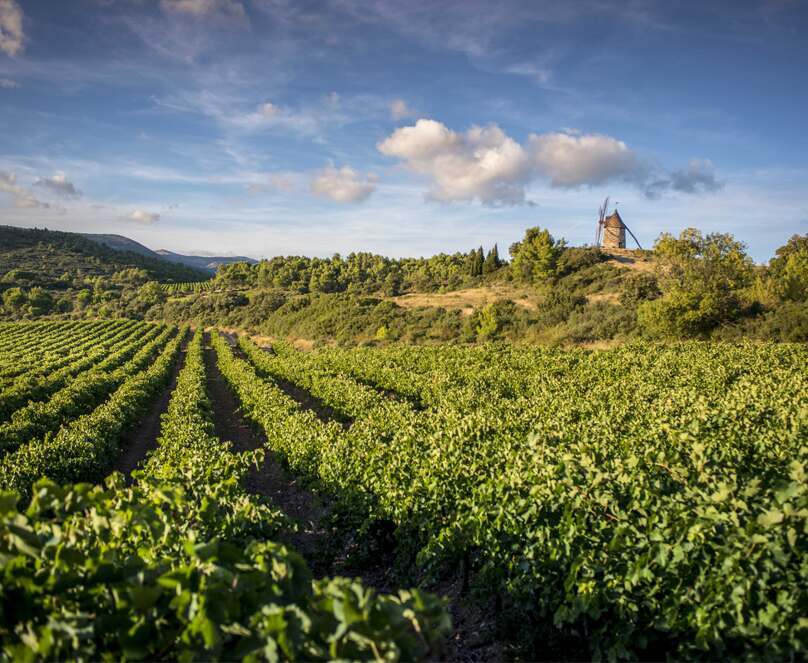
French wine classification operates on two distinct levels, each serving a different purpose in defining how wines are made, understood and valued. The first level is the national AOC/AOP/ IGP system, which forms the legal foundation for all French wine. It sets out where grapes must be grown, which varieties are permitted, how the wine may be produced, and what yields and techniques are allowed. These rules apply everywhere—from Champagne’s chalky slopes to the sun-drenched vineyards of Provence—and exist to protect authenticity and origin rather than to rank quality.
The second level consists of regional quality hierarchies which sit within the AOC framework rather than replacing it. These are unique to certain regions and reflect long-established traditions. In Bordeaux, for example, classifications focus on estates (châteaux) — most famously in the 1855 Classification — which ranks properties according to historical reputation, from first to fifth growths (crus). Burgundy takes a different approach by ranking vineyards (climats) rather than producers, identifying exceptional terroirs as Premier Cru or Grand Cru sites. Champagne distinguishes between villages through the historic Échelle des Crus system, which once classified communes as Grand Cru or Premier Cru.
Alongside these traditional structures, a growing number of winemakers choose to work outside the appellation pyramid altogether. By labelling their wines as Vin de France, they gain the freedom to experiment with non traditional blends, revive heritage grape varieties or explore alternative wine-making and ageing techniques. This creative movement is especially visible among younger producers in regions such as the Loire, Beaujolais and parts of the Languedoc, and even in classic regions like Bordeaux and the Rhône, where some vignerons are embracing flexibility to push stylistic boundaries.
Geography & Climate Change
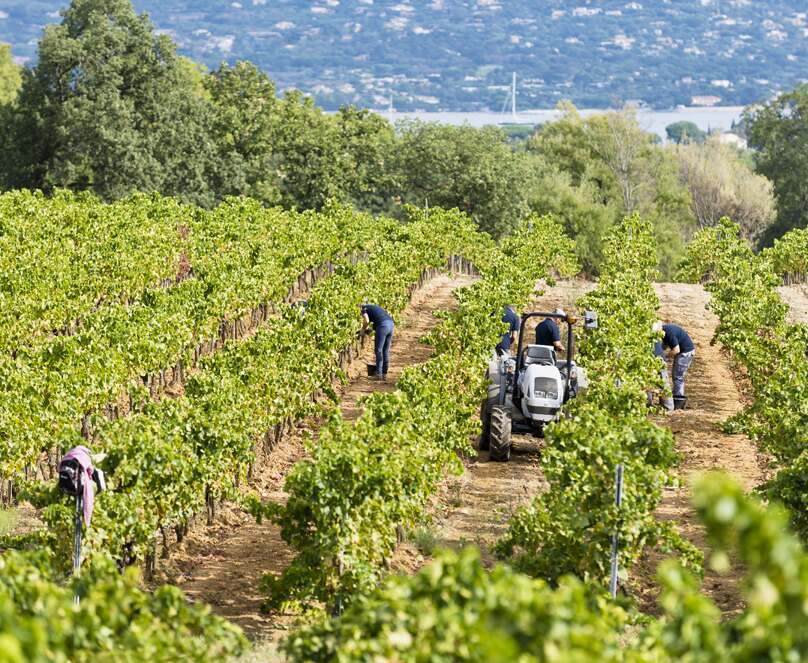
France’s geography is uniquely suited to producing world class wines, spanning a broad range of climates from maritime to continental to Mediterranean. In the west, the Atlantic shapes Bordeaux and the Loire Valley, moderating temperatures and encouraging freshness and balance. Moving inland, Burgundy and Champagne experience cooler continental conditions, where long ripening seasons allow Chardonnay and Pinot Noir to develop nuance and finesse.
The Rhône Valley bridges climates: the north is defined by steep granite slopes and cooler winds, while the south enjoys Mediterranean warmth, ideal for ripe, expressive blends. Along the southern coast, regions such as Provence and the Languedoc benefit from abundant sunshine, dry summers and cooling winds, particularly favourable to organic viticulture. Further east, the Jura, nestled between Burgundy and Switzerland, has a cool continental climate; Savoie, set in the French Alps, is shaped by altitude and glacial soils.
Terroir/Soils
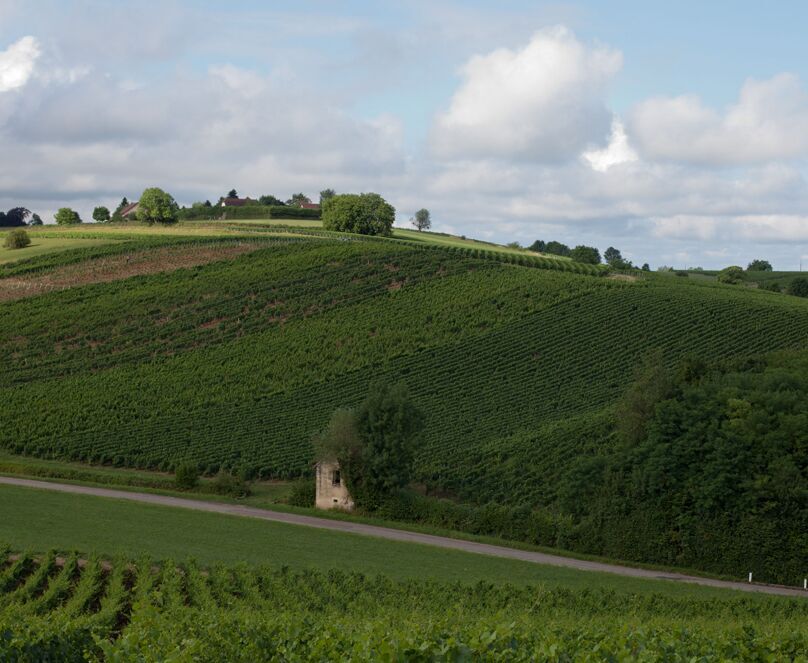
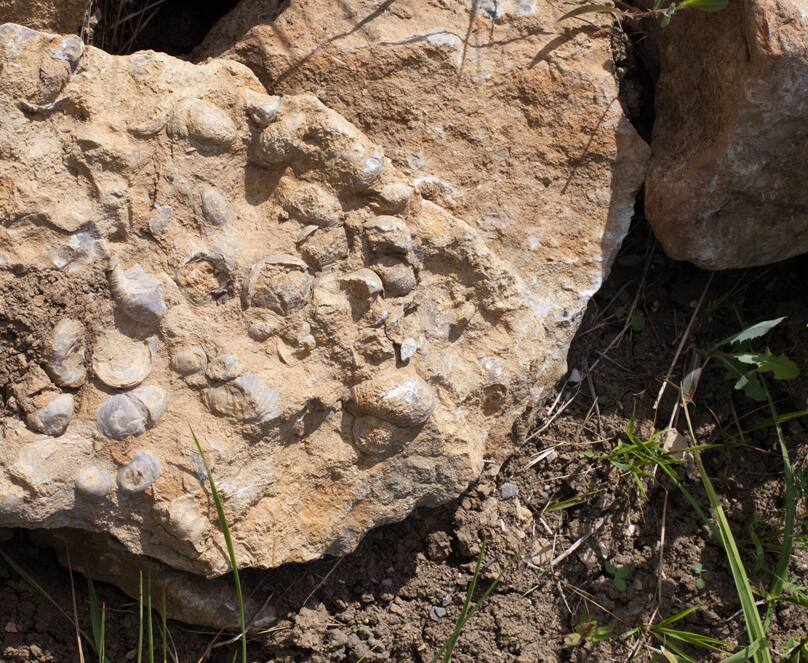
France’s reputation rests on its remarkable tapestry of terroirs — an intricate interplay of soil, climate, elevation and exposure that shapes every bottle. Ancient limestone and chalk dominate regions like Champagne, Burgundy and the Loire Valley, producing wines of purity, tension and longevity. Clay and marl contribute depth and structure, particularly in Burgundy and parts of Bordeaux, while the Médoc’s gravel soils provide warmth and drainage ideal for Cabernet Sauvignon.
Further south, the Rhône Valley showcases dramatic contrasts: granite and schist in the north give Syrah its aromatic intensity, while the south’s sun baked stones create rich, generous blends led by Grenache. Along the Mediterranean, regions such as Provence and the Languedoc offer an expansive mix of limestone, schist, sandstone and clay, supporting everything from crisp whites to structured reds.
In Alsace, the rain shadow of the Vosges Mountains protects a mosaic of volcanic, marl and sandstone soils, allowing aromatic varieties to thrive with precision and lift.
This diversity is France’s greatest strength. Each region, each village—even each vineyard—expresses a distinct identity rooted in the land.
Grapes
France is the birthplace of many of the world’s most celebrated grape varieties, each deeply tied to its region of origin. Boasting 298 officially recognised grapes authorised for wine production, some sources note that more than 2,000 varieties are grown in some capacity—including historical, experimental or extremely rare plantings. Despite this remarkable diversity, just 20 varieties account for 87% of the country’s vineyard area, highlighting both France’s deep viticultural heritage and the dominance of a small group of globally influential varieties.
In Bordeaux, Cabernet Sauvignon, Merlot and Cabernet Franc form the foundation of some of the world’s most admired reds, while Burgundy’s Pinot Noir and Chardonnay remain benchmarks for terroir driven finesse. The Rhône Valley showcases Syrah, Grenache, Mourvèdre and Viognier, producing wines that range from peppery and powerful to silky and aromatic. In the Loire Valley, Sauvignon Blanc, Chenin Blanc and Cabernet Franc shine in expressions from taut and mineral to richly textured.
Along the Mediterranean, Provence and the Languedoc cultivate an expansive palette including Carignan, Cinsault, Picpoul and Terret, reflecting the region’s versatility. Alsace contributes Riesling, Gewurztraminer and Pinot Gris, celebrated for purity and aromatic intensity, while regions such as the southwest champion distinctive grapes like Tannat and the Loire’s Melon de Bourgogne.
Further east, the Jura adds a unique dimension with Savagnin, Poulsard and Trousseau, alongside rare heritage varieties such as Petit Béclan, Gros Béclan, Enfariné Noir and Melon à Queue Rouge. Together, France’s iconic and obscure grapes form a mosaic of flavour, history and regional identity that continues to captivate the world.
Our French wine selection
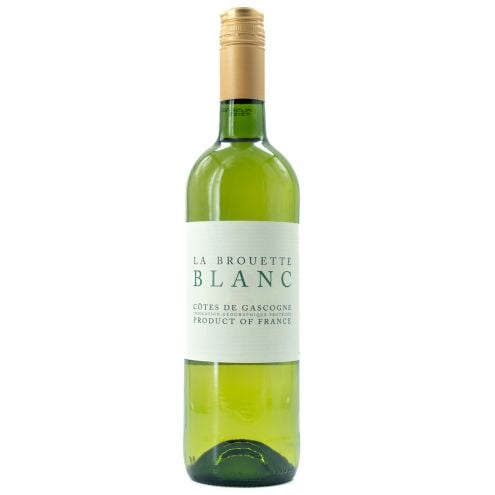
La Brouette Blanc Producteurs Plaimont IGP Cotes de Gascogne 2025
France French Country Producteurs Plaimont
La Brouette Blanc Producteurs Plaimont IGP Cotes de Gascogne 2025
- GRAPE Colombard blend
- ABV 11.0%
- CLOSURE SCREWC
Exclusive
Corney & Barrow
Corney & Barrow Blanc IGP Cotes de Gascogne 2025
France French Country Producteurs Plaimont
Corney & Barrow Blanc IGP Cotes de Gascogne 2025
- GRAPE Colombard blend
- ABV 11.0%
- CLOSURE SCREWC
Exclusive
Corney & Barrow

Corney & Barrow Rouge Vin de France 2025
France Vin De France Celliers Jean D'Alibert
Corney & Barrow Rouge Vin de France 2025
- GRAPE Carignan Blend
- ABV 12.5%
- CLOSURE SCREWC
Exclusive
Corney & Barrow

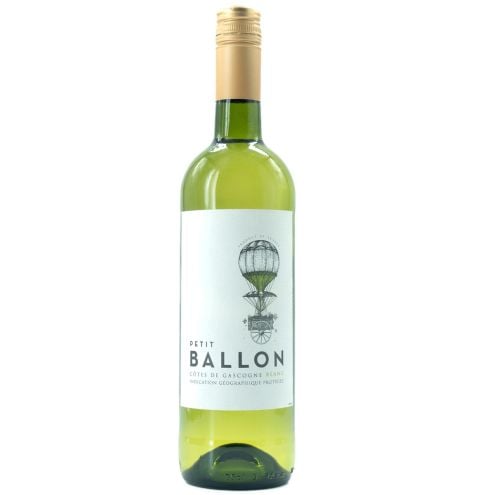
Petit Ballon Blanc Producteurs Plaimont IGP Cotes de Gascogne 2025
France French Country Producteurs Plaimont
Petit Ballon Blanc Producteurs Plaimont IGP Cotes de Gascogne 2025
- GRAPE Colombard blend
- ABV 11.0%
- CLOSURE SCREWC
Exclusive
Corney & Barrow