

AustralianWines
5th
largest producer of wine in the world
60%
of Australian wine is exported
1788
first vine cuttings planted in New South Wales
Australian producers
Exclusive Region
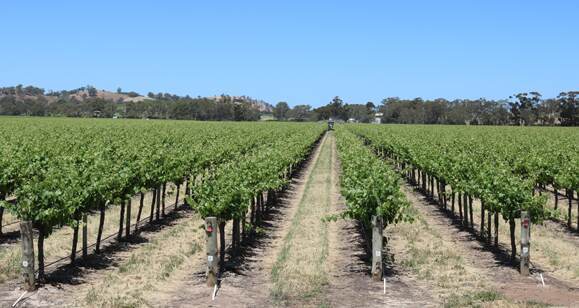
Barossa Boy
Barossa Valley
Barossa Boy was founded by Trent Burge. His family’s history in the Barossa Valley goes back to 1855 when his great-great-great grandfather, John Burge, immigrated to South Australia. John began work as a winemaker and every generation has followed in his footsteps. Winemaking is well and truly in the Burge blood.Involved in every aspect of grape growing and winemaking, Trent learnt the trade quite literally from the ground up. Having grown up on the Barossa land, he joined the family business (Grant Burge Wines) in 2006 where his passion for winemaking intensified. In 2016 he decided it was time to create his own label, putting his own spin on the regional classics… and Barossa Boy was born.Trent’s deep understanding of the land plays a key role in the style of his wines, sourcing grapes of the highest quality from specific long-term growers with whom he has worked with over many vintages. He crafts wines that are classically Barossa in structure and flavour profile, but with a lightness of touch that is resolutely modern.
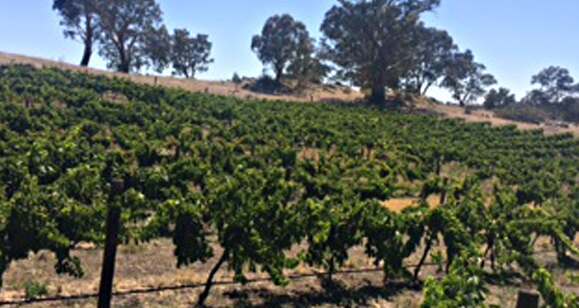
Lonely Vineyard
Eden Valley
Michael Schreurs founded Lonely Vineyard in order to produce characterful wines from special sites in Eden Valley, South Australia. The warm, dry days and cold nights, combined with the unique soils and microclimates within the region, allow him to make expressive wines with a fresh finish. Michael has an extensive history in the Australian wine industry, having worked as winemaker at Seppelts Great Western Winery for three years, followed by six years at Henschke in Eden Valley and an eight-year stint as Chief Winemaker at Corney & Barrow favourite The Lane Vineyard in the Adelaide Hills. His winemaking philosophy is one of minimal intervention, allowing the wines to reflect the land from which they were grown.
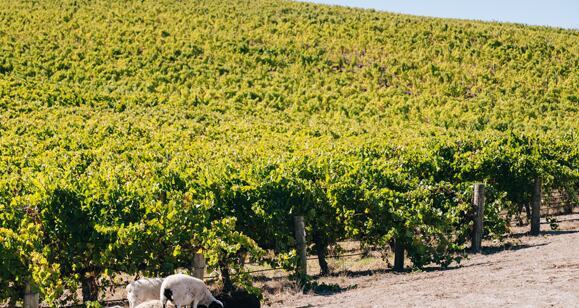
The Lane Vineyard
Adelaide Hills
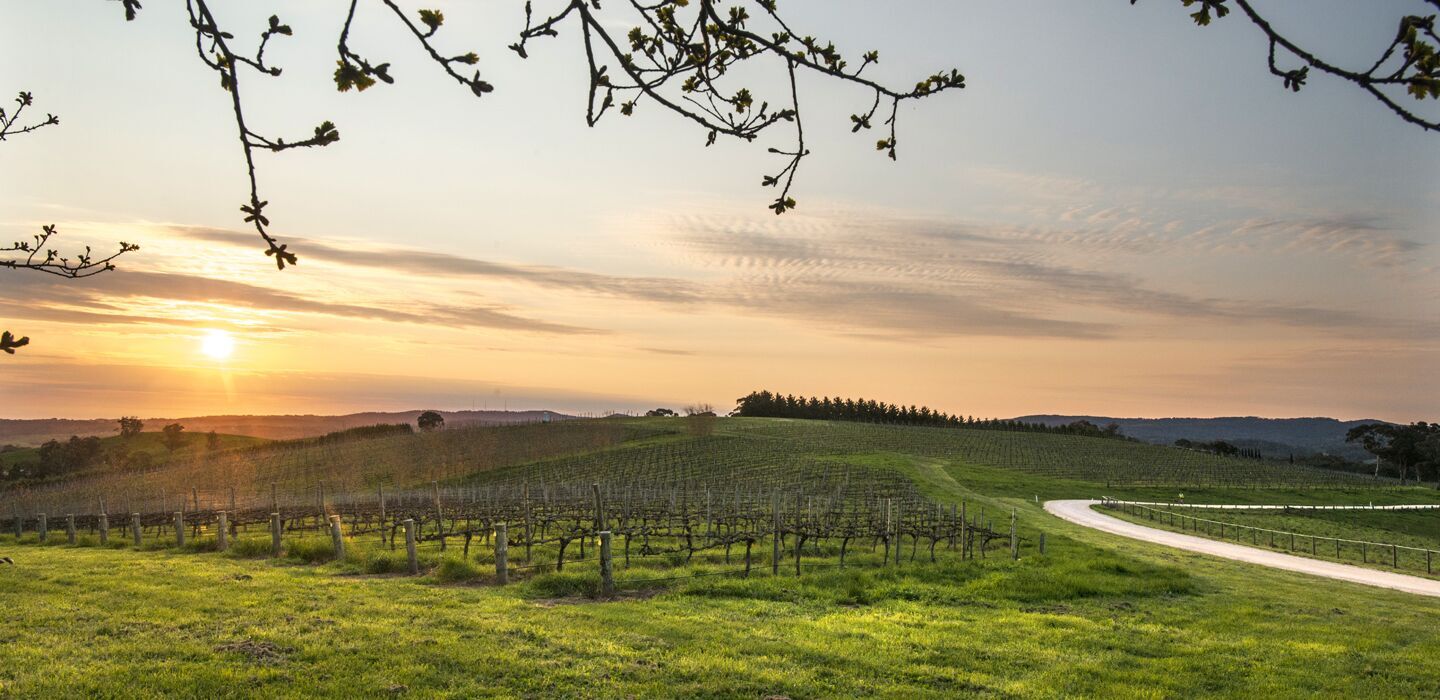
Set 450m high in the Adelaide Hills in South Australia, this boutique winery was the brainchild of well-known Australian winemaker John Edwards. His long-held dream was to produce wines with true elegance, bringing together expressive Australian fruit with the refined structure he so admired in Old World Classics such as Burgundian Chardonnay and Rhône Syrah. Convinced of the unique qualities of the Adelaide Hills region and its potential for ‘fine wine’, John scoured the area for suitable sites. It was two years before he came upon the land he was looking for – at the end of a small lane in the village of Hahndorf. In 1993, ‘The Lane’ vineyards were born! The Adelaide Hills is one of Australia’s most distinctive areas for grape-growing. Its relatively cool climate (for Australia at least!) and, crucially, fresher night-time temperatures give the vines a chance to rest, promoting delicate flavours and fine natural acidities in the wines. The Edwards family have now passed the baton to a talented new team, headed up by Jared Stringer, who has extensive experience making wine all over South Australia, as well as in Italy and Germany. A passion for place influences everything at The Lane. Jared and his team analyse the varied soils and slopes within the vineyards, matching grape varieties to the myriad microclimates and aspects available to them. Meticulous vineyard husbandry, traditional and modern winemaking techniques, experimentation with yeasts, fine lees and use of old and new French oak, all play their part in the quality of the wines. Their mission is to create memorable, vibrant wines that truly express the land they come from.
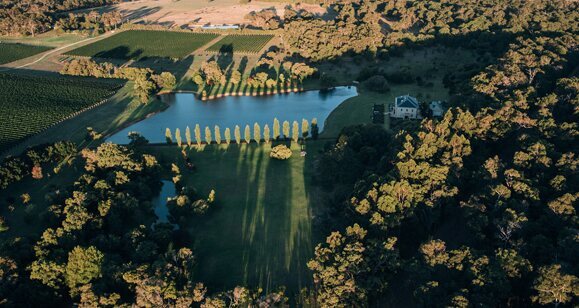
Fraser Gallop Estate
Margaret River
Tech entrepreneur, Nigel, has poured his heart and soul into Fraser Gallop Estate. Inspired by his love of the wines of Napa Valley, Burgundy and Bordeaux, he carried out extensive research into the ideal location and conditions to produce his own wines.From the outset, everything possible has been done to ensure not just great quality, but wines that are true to the land. “From the selection of the property, through the recruitment of the best people and enormous attention to detail, we maintain that commitment,” says Nigel. “We do things the correct way, without compromise - never the easy way”. The estate’s twenty hectares of vineyards are located on the highest point in Wilyabrup, so benefit from breezes off the nearby Indian Ocean, keeping the temperatures mild in summer. Planted without irrigation, the vines have been challenged to find their own water, deep in the subsoil layers. This has created vines that produce smaller berries with heightened flavour intensity and a ‘slate-like’ minerality. Winemaker Clive Otto has been with the estate since its inception and oversaw the design and construction of its state-of-the-art winery. His philosophy is to allow the fruit to speak for itself, striving to create wines showcasing balance and finesse on release, with the structure and pedigree to thrive with careful cellaring.
Australia’s Wine History
Australia’s wine story begins with the arrival of European settlements in the late 18th century. With no native grapevines, early viticulture relied entirely on imported European stock. After several years of trial and error, a decisive shift came in 1832, when James Busby returned from France and Spain carrying cuttings that became the genetic foundation of Australia’s classic vineyards. Over the following decades, commercial plantings spread through New South Wales, Tasmania, Victoria, Western Australia, and South Australia, guided by the expertise of Italian, Silesian, Dalmatian, and Swiss settlers.
When Phylloxera reached Victoria in 1877 on infected European cuttings, strict quarantine measures prevented the widespread devastation sweeping across Europe. As a result, most major Australian wine regions remain phylloxera-free today, and South Australia is home to some of the world’s oldest ungrafted vines still growing on original European rootstocks.
From the early 1900s to the 1940s, fortified wines dominated both domestic consumption and exports. After World War II, tastes shifted toward table wines, and pioneering winemakers — most famously Max Schubert, whose 1951 Penfolds Grange proved Australian Shiraz could rival the world’s best — drove a new era of ambition.
Since the 1960s, advances in winemaking and the rise of cool climate viticulture and boutique wineries have reshaped the industry. Modern Australian wine blends old vine heritage with technical precision, producing styles that are confidently its own. Today, more than 100 grape varieties are grown across 65 recognised wine regions.
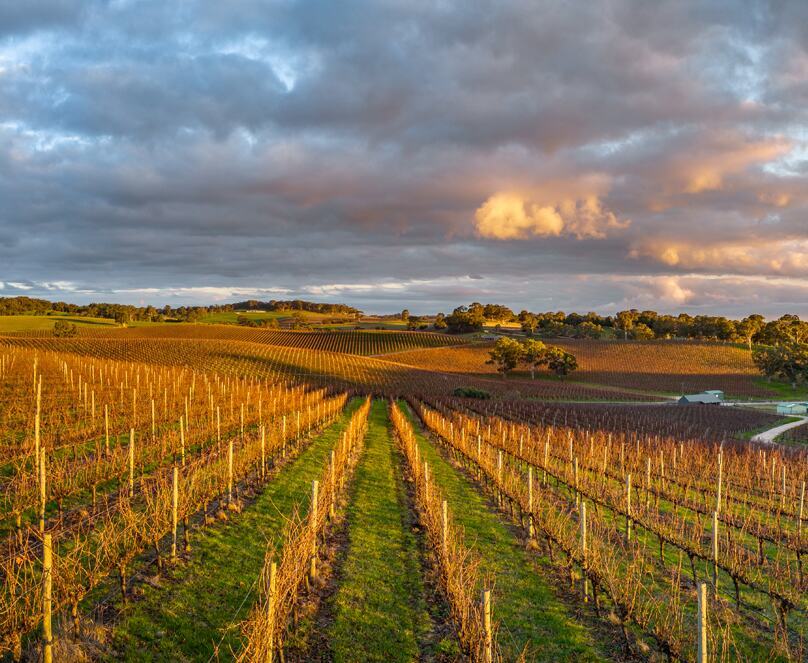
Australia’s Geography & Climate
Australia is the world’s sixth-largest country by land mass and the only island continent. It is home to snowfields, long stretches of coastline, rainforests, unique flora and fauna, and some of the world’s oldest soils.
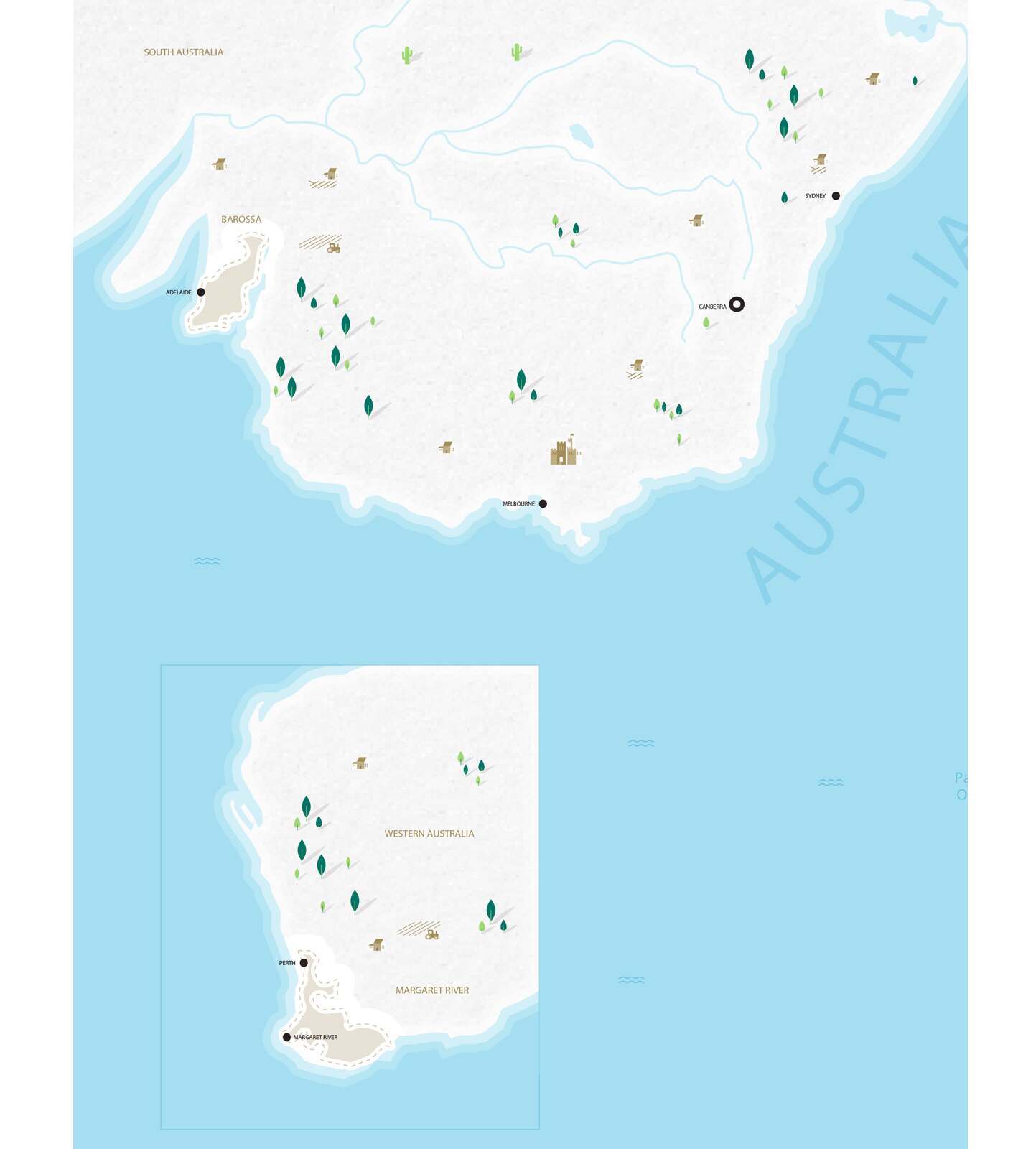
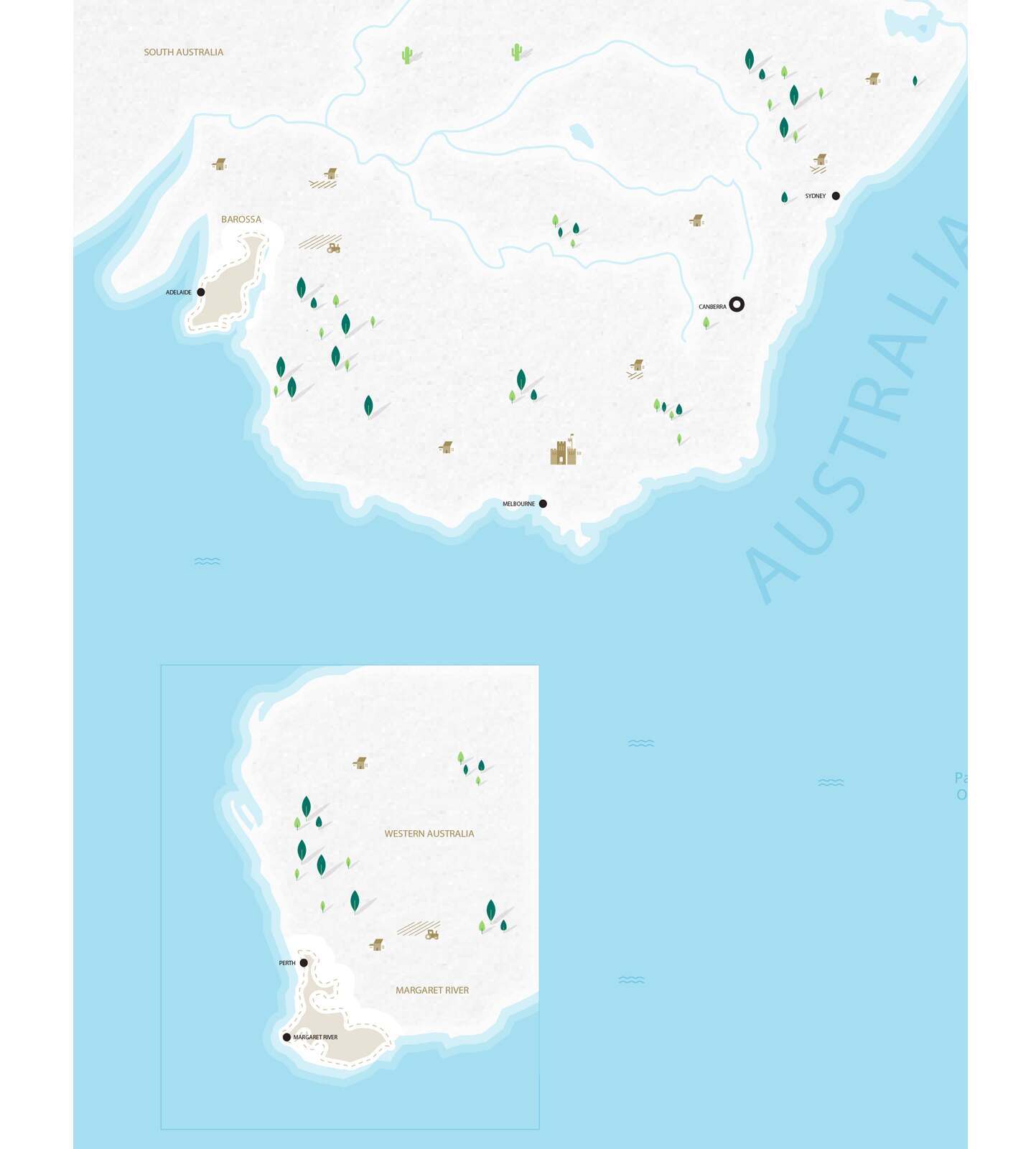
Wine is produced in all six states and two territories — although most wine production is concentrated around the southeast and southwest of the country, where temperatures are coolest. Roughly 145,000 hectares (or 0.02% of Australia’s total land mass) are under vine, slightly less than Bordeaux and Burgundy combined.
Viticulture spans climates from the alpine zones of southeastern Australia and Tasmania to the Mediterranean conditions of South Australia and Western Australia, and the subtropical and tropical regions of Queensland. This breadth allows for a wide spectrum of grape varieties and wine styles, shaped by local conditions rather than a single national profile.
The most successful regions cluster in the southern half of the continent, where maritime influences temper heat and extend the growing season. The Southern Ocean exerts a defining influence on these southern regions. Its cold, storm-driven systems moderate temperatures along Australia’s long east–west coastline, supporting gradual ripening and preserving acidity — key factors in producing balanced wines. Low population density and strict environmental regulation further contribute to clean air and low pollution levels across major wine regions.
Combined with ancient, nutrient-poor soils, these conditions create distinctive terroirs that differ markedly from those of Europe while supporting wines of comparable quality and character.
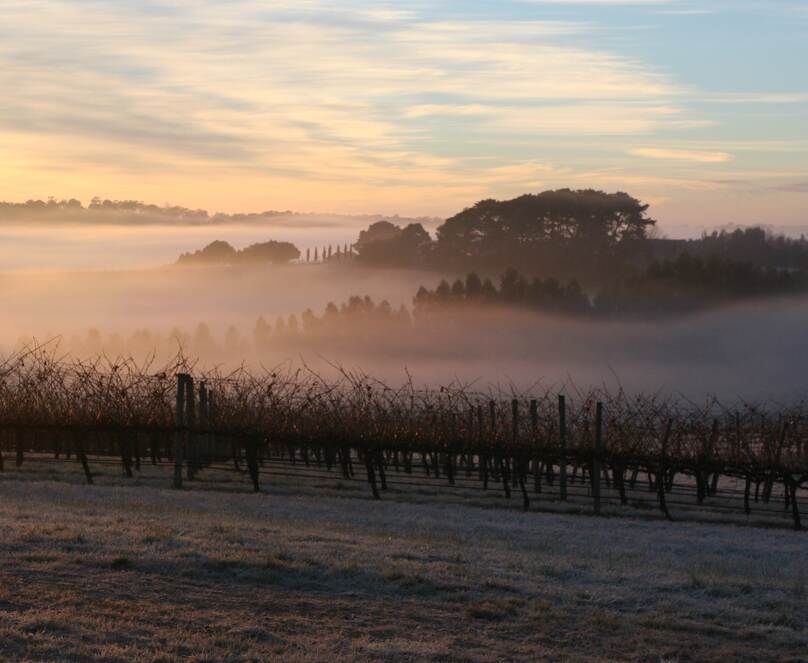
Australia’s Terroir/Soils
Australia’s terroir cannot be defined by a single soil identity. Much of the continent has been exposed to weathering for over 100 million years, creating vineyard soils that are nutrient-poor, highly mineralised, and among the oldest viticultural substrates in the world. Unlike Europe and North America, Australia was largely untouched by glacial activity during the last ice age (c. 20,000–26,000 years ago), allowing soils to age in place rather than be renewed by glacial scouring.
Younger deposits overlay this ancient base in shifting patterns, including wind-blown sands, marine limestones, alluvial sediments, and pockets of volcanic material. This creates significant soil diversity, even within a single vineyard block, and gives growers a wide range of conditions to manage.
• Granite and schist — Common in elevated or inland districts; these weathered rocks contribute structure, tension, and a firm mineral line to the wines.
• Limestone and calcareous soils — Especially prevalent in South Australia and Western Australia; they offer reliable water retention and help preserve natural acidity, supporting balanced, age-worthy wines.
• Basalt and volcanic soils — Found in regions such as the Grampians and Mount Gambier; these iron rich soils provide both fertility and excellent drainage, often producing wines with depth and aromatic lift.
• Sands and sandy loams — Typical of coastal and riverine zones; they encourage earlier ripening and heightened aromatic expression, particularly in white varieties and lighter-bodied reds.
Together, these ancient and varied soils form the foundation of Australia’s diverse wine styles, reinforcing the country’s reputation for distinctive terroir and regionally expressive wines.
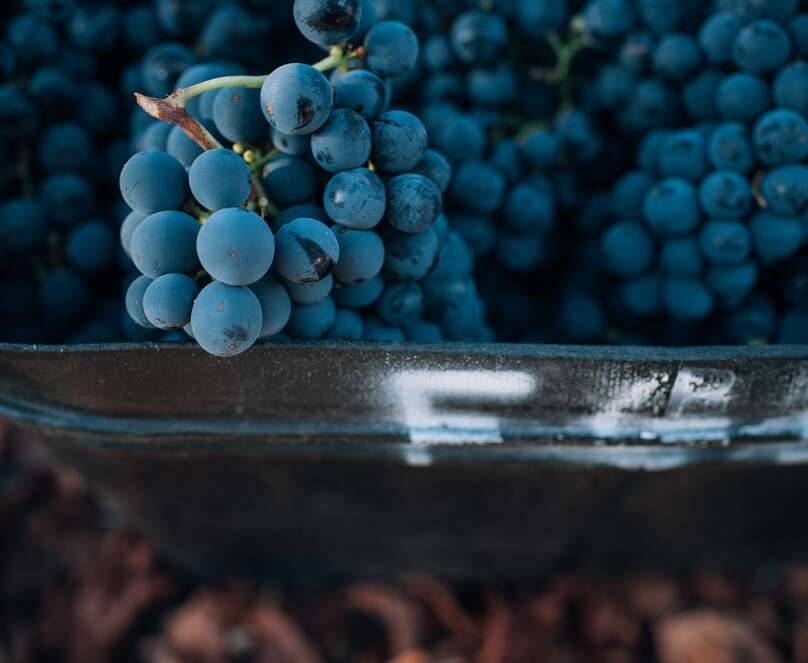
Australia’s Grapes
The great majority of wine production is attributed to a handful of red and white grape varieties, with Shiraz and Chardonnay leading their respective categories.
Shiraz is firmly established as Australia’s signature grape and most recognised wine export. Grown in almost every region — apart from a handful of cooler-climate regions where it struggles to ripen — it accounts for nearly a quarter of national production. Australia boasts some of the world’s oldest continuously producing Shiraz vines, with plantings dating back to 1843. The local name ‘Shiraz’ was adopted in place of the French ‘Syrah’ in the 19th century and has since become central to the country’s wine identity.
Chardonnay is the most planted white variety, accounting for well over a third of Australia’s white wine production. There is no single Australian Chardonnay style; expressions vary widely according to climate, soils and winemaking. While the grape was once associated with the rich, heavily oaked styles of the 1980s and ’90s, many contemporary examples emphasise acidity and restraint.
Other prominent varieties include Riesling, Semillon, Chardonnay, Pinot Noir, Grenache and Cabernet Sauvignon. Alongside these classics, interest in alternative — largely Mediterranean — varieties continues to grow. Grapes such as Fiano, Nebbiolo, Nero d’Avola, Sangiovese, Vermentino and Grüner Veltliner are increasingly planted, offering growers options well-suited to warm, dry conditions and adding further nuance to Australia’s evolving wine landscape.
Our Australian wine selection
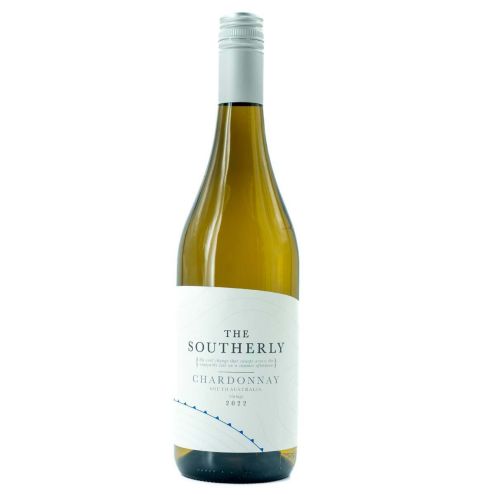
The Southerly Chardonnay 2023
Australia South Australia Southerly (The)
A New World Chardonnay with Old World restraint and poise, packed with ripe peach, grapefruit and an infusion of kaffir lime.
- GRAPE Chardonnay
- ABV 12.5%
- CLOSURE SCREWC
Exclusive
Corney & Barrow
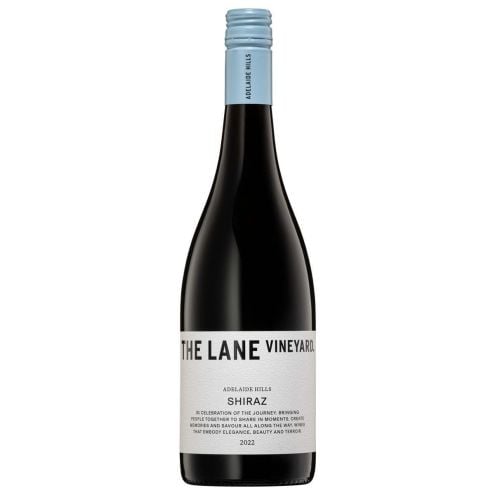
Shiraz The Lane 2022
Australia South Australia Lane Vineyard (The)
A classic blend, in which spicy, dark-fruited Shiraz is complemented by a dash of white Viognier, lending a floral peachy note and fleshy softness.
- GRAPE Syrah/Shiraz blend
- ABV 14.0%
- CLOSURE SCREWC
-
DRINK NOW
2025 - 2027
Exclusive
Corney & Barrow
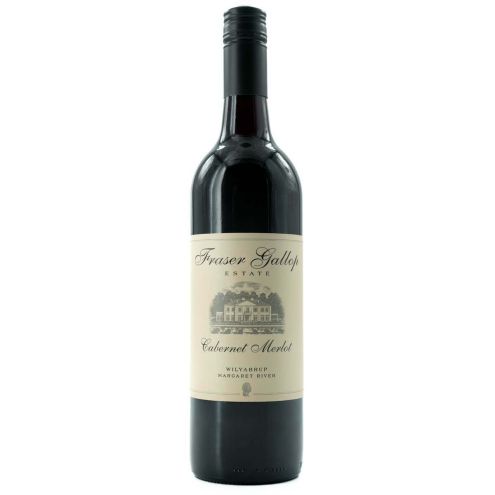
Cabernet Merlot Fraser Gallop Estate 2022
Australia Western Australia Fraser Gallop Estate
Effortlessly drinkable with concentrated fruit balanced by fresh acidity. Juicy cherries and dark plums, a wisp of sweet smoke and supple tannins.
- GRAPE Cabernet Sauvignon/Merlot/Cabernet Franc
- ABV 13.5%
- CLOSURE SCREWC
-
DRINK NOW
LAY DOWN
2025 - 2028
Exclusive
Corney & Barrow
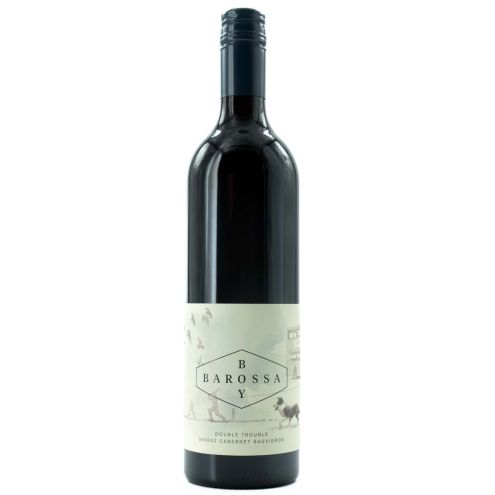
Double Trouble Shiraz Cabernet Barossa Boy 2023
Australia South Australia Barossa Boy
Blending elegant Eden Valley Cabernet Sauvignon with rich Shiraz from the Barossa Valley floor, Double Trouble gives an honest expression of the region, with powerful fruit and elegant freshness.
- GRAPE Shiraz/Cabernet Sauvignon
- ABV 14.5%
- CLOSURE SCREWC
-
DRINK NOW
LAY DOWN
2025 - 2029
Exclusive
Corney & Barrow